founders-note
Founder's Note: A Crisis of Evidence
Abid Omar ·
← Unveiling Pakistan's Air Pollution
by Abid Omar
There is a particular quality to the air in Lahore in winter. Gone is the promise of clean, cold air. Instead, a kind of oppression descends: a thick, acrid haze that coats the tongue and stings the eyes. It has a weight, a physical presence. It smudges the skyline into a featureless grey canvas and turns the midday sun into a pale, distant blur. This is the air of the ‘fifth season’, the season of smog, a time when the simple, unconscious act of breathing becomes a deliberate, and often painful, calculation of risk.
In the winter of 2024, this seasonal affliction escalated into a full-blown atmospheric emergency. In Multan, a city of ancient saints and shrines, the Air Quality Index (AQI) thickened the air into a slurry of poison, with numbers soaring past 2000. Lahore, the city of gardens, was a suffocating blanket, crossing 1000. These are not mere numbers. They are the chemical signatures of a slow, systemic violence being inflicted on millions of lungs. To contextualise these figures is to witness the scale of the crisis: they are more than 25 times the safe limits recommended by the World Health Organization. The air is so toxic that it would shut down cities elsewhere. These figures represent a state of atmospheric siege.
And yet, for years, the official truth was that there was nothing to see. It was merely ‘fog’, a romantic winter guest, a trope of nostalgic poetry. The only evidence to the contrary came from the unsanctioned hum of low-cost sensors run by citizens and independent organisations—a guerilla science that dared to tell a different story in real-time. The question these small, persistent machines posed was not just about parts-per-million, but about power. Who has the right to measure the air we all share? And who has the authority to deny that measurement? This created a profound data vacuum, a space of official silence where fear, speculation, and ultimately, ineffective policy festered. In the absence of a credible, state-sanctioned narrative grounded in science, the public was left to navigate the toxic haze with little more than instinct and rumour.
The cost of this denial is written in our bodies and our graveyards. Air pollution is the country’s most prolific, most democratic killer. It takes, on average, 3.9 years from the life of every single Pakistani. It has claimed more lives each year than the long and brutal war on terror did in two decades. This is not a metaphor. It is an arithmetic of loss. An entire generation of children is inhaling a future of diminished capacity, of stunted lungs and compromised minds; their cognitive development silently eroded by the air they breathe on the way to school. And the economy, tethered to this public sickness, bleeds billions of dollars in a slow, continuous haemorrhage of lost workdays, strained healthcare systems, and diminished productivity.
Faced with this mounting, undeniable crisis, the state has developed a sophisticated machinery for managing public perception. We have seen the sudden declaration of a ‘war on smog’, a powerful phrase that promises decisive action. But the weapons deployed in this war have been theatrical. We have seen the spectacle of major roads being washed with precious water, an act of such profound scientific illiteracy which serves only to expose a deep misunderstanding of the problem. Fine particulate matter, the primary danger, is an atmospheric phenomenon, not a terrestrial one; washing the asphalt is like trying to cure pneumonia by cleaning the floor of the hospital.
This theatre of the absurd has recently been upgraded with more impressive props. We have seen the deployment of ‘anti-smog cannons’—massive misting jets that spray atomised water into the air—and installation of ‘smog towers’. These are technologies of distraction, designed to create the illusion of a high-tech solution. But the science is clear: their impact is negligible, localised, and temporary. They are an attempt to scrub the symptoms from a few cubic metres of air while ignoring the multi-province, factory-andfleet-sized sources of the pollution itself.
This performance—of road-washing, of smog guns, of sudden school closures and reactive bans—is the logical outcome of a system operating without an evidence base. When you do not know with scientific certainty where the pollution is coming from, you are forced
Air pollution is the country’s most prolific, most democratic killer. It has claimed more lives each year than the long and brutal war on terror did in two decades.
to resort to spectacle. When you lack a detailed map of the enemy, you end up firing cannons into the fog. It is easy to critique these as drawing-room decisions made in isolation, but the reality is more systemic. They are the decisions of actors working without a script, without the foundational scientific knowledge that must precede any effective policy.
This report is an attempt to begin writing that script. It is the work of one small, independent organisation to start building the evidence base that has been so conspicuously absent. It is not, by any means, a complete solution. It is, in fact, wholly insufficient to solve the crisis on its own. What this report offers is the first critical step: a foundational layer of data and analysis that sets the stage for the urgent, deeper scientific work that must follow. Before effective policies can be crafted, Pakistan needs a new level of scientific inquiry. We need comprehensive, nationwide source apportionment studies to chemically fingerprint pollution and trace it back to its specific origins. We need chemical speciation to
understand the toxic composition of the particulate matter we are breathing. We need more granular emissions inventories that are updated annually. And we need rigorous economic cost-benefit analyses of mitigation strategies to guide investment.
This report is an argument that this work must begin now. It is an attempt to replace the architecture of apathy with an architecture of accountability, built on the bedrock of empirical evidence.
We do not offer another list of vague recommendations. Instead, we offer a detailed map of the problem as we currently understand it, a first draft of the evidence required for change. This report will:
Dissect the poison: We begin by examining the science of the pollutants themselves—the invisible assassins like PM2.5, and the precursor gases like NOx and SO2—to understand the specific chemical nature of our enemy.
Unmask the sources: This is the heart of our investigation. We present the first-ever, bottom-up emissions inventories for Pakistan’s four largest and most diverse urban airsheds. This inventory ends the era of speculation, pointing with scientific clarity to the smokestacks, the tailpipes, the brick kilns, and the fires responsible for the bulk of our pollution.
Count the human cost: We move beyond statistics to document the devastating toll on our health, our children, and particularly on women, who, through social and biological factors, bear a disproportionate share of this toxic burden.
Deconstruct the governance failure: We trace the two-decade history of well-intentioned but poorly implemented policy, benchmarking our national and provincial governance frameworks against global best practices to reveal not just what is broken, but how it can be fixed.
Provide a blueprint for action: We explore the proven, technically feasible, and economically viable solutions that can lead to clean air. This is not a dream; it is a matter of engineering, economics, and, above all, political will informed by science.
This report is not for filing away on a shelf. It is an invitation to begin a new kind of conversation—one grounded in data, driven by a shared urgency, and dedicated to the principle that every citizen has a right to clean air. The air is a commons. It belongs to everyone and no one. To poison it is to poison the public trust. To reclaim it is not just a matter of public health, it is a matter of justice. The spectacle must end. The evidence is in. Clean air is not negotiable. It is time to get to work.
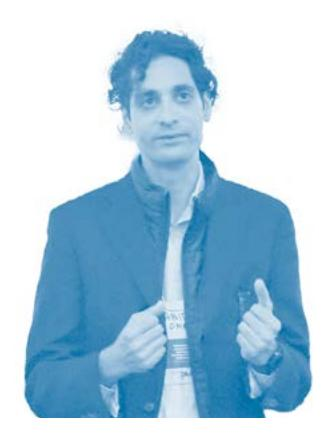
Abid Omar is Founder of the Pakistan Air Quality Initiative (PAQI).