critical-review
Critical Review: Air as the Commons
Dr. Abid Qaiyum Suleri ·
← Unveiling Pakistan's Air Pollution
by Abid Qaiyum Suleri
Clean air is the invisible infrastructure that sustains life itself. In Pakistan, this foundation is steadily eroding. Each winter, the country’s plains disappear beneath a blanket of smog, turning the simple act of breathing into a daily health risk. Across much of the lowland belt, the sun fades into a yellow disc, schoolchildren walk to class in masks, and labourers inhale the fumes of our economic choices. The Energy Policy Institute at the University of Chicago estimates that polluted air robs the average Pakistani of nearly four years of life, and a Lahori of seven. This is not just an environmental concern; it is a development failure and a silent public-health emergency.
Air pollution sits at the nexus of Pakistan’s three grand challenges for sustainable development: environmental degradation, economic fragility, and social inequity. It corrodes ecosystems, slashes productivity, and widens inequality. But before delving into the extent of these challenges and sharing my thoughts on what may be done about them, let me take this opportunity to congratulate Abid Omar, his team at the Pakistan Air Quality Initiative, and all the contributing authors of the volume in hand for producing such a comprehensive compilation on Pakistan’s air quality landscape.
The chapters in this book are akin to a diagnostic report of the air we breathe. But unlike a typical lab report, they do not stop at identifying symptoms; they trace the underlying causes of our deteriorating air-health system and suggest ways to heal it. Whether one accepts a diagnosis or not does not change the reality of the disease. One may seek a second opinion, but when every credible laboratory confirms the same findings, denial ceases to be an option. That is what gives this volume its strength. It brings together experts from diverse disciplines, yet all converge on a single conclusion: Pakistan’s air is in distress, and the treatment can no longer be deferred.[^1]
The book estimates that the economic cost of pollution exceeds 6.5% of Pakistan’s GDP each year, a burden borne disproportionately by those least responsible for causing it. In effect, Pakistan’s poor are subsidising the pollution of the privileged.
For too long, we have pursued growth as if clean air were expendable collateral. The country’s development model has treated environmental damage as an externality rather than a constraint. Dirty kilns, low-grade fuels, unregulated factories, and outdated transport fleets have powered short-term GDP gains at the expense of human longevity. The result is an invisible, regressive tax—paid not in rupees but in reduced life expectancy.
The book also marks a critical departure from conjecture to evidence. Building on work presented in Chapters 1-3 and 6, it provides Pakistan’s first city-level emissions inventories and quantifies how transport, industry, kilns, and agriculture interact to poison the air. But evidence alone cannot substitute for governance. Pakistan has a long tradition of diagnosing problems with precision and implementing solutions with hesitation.
The data exposes a stark heterogeneity. Lahore’s smog stems mainly from transport (35%), heavy industry (28%), and kilns (17%); Karachi’s air is dominated by maritime and industrial emissions; Islamabad-Rawalpindi suffers from congestion and dust; and Peshawar endures atmospheric trapping worsened by two-stroke engines. Yet, as I have argued repeatedly, national responses still rely on uniform bans and seasonal theatrics. Washing roads, firing water cannons, or declaring ad-hoc “smog holidays” may create headlines, but they betray a policymaking culture addicted to optics.
In my opinion, any policy to be successful requires at least five prerequisites. The first is adequate financial resources and budgetary allocations to translate intent into implementation. The second is institutional arrangement and clear ownership so that it does not end up becoming “everyone’s responsibility and no one’s accountability.”
[^1]This introduction draws on empirical findings from the book in hand, especially Chapters 1-3, 6, 13, 14, and 17. Interpretive analysis and critique represent the author’s independent assessment, informed by participation in national climate and economic advisory forums.
The third is the availability of trained human resources and technological support without skilled professionals, credible data, and modern tools, even the best policies remain aspirational. The fourth is continuity of purpose across political cycles so that long-term reforms are insulated from short-term political turnover. The fifth, and perhaps most decisive, is public ownership. Unless citizens internalise the need for cleaner air and change daily behaviours accordingly, environmental reform will remain a government plan rather than a societal mission.
One can see some of these prerequisites being met in Punjab recently, which shows a glimmer of change. The Punjab Clean Air Policy (2023), real-time monitoring through the Smog War Room, conversion of brick kilns to zig-zag technology, and the introduction of electric buses and e-motorcycles mark a shift from denial to design. Waste-management pilots under Suthra Punjab further extend this effort. But progress remains fragile. Enforcement is inconsistent, funding remains donor-driven, coordination episodic, and public participation limited.
At the national level, the Nationally Determined Contribution (NDC 3.0) of September 2025 sets ambitious climate targets, aiming to reduce projected greenhouse-gas emissions by 50% by 2035 through increased energy efficiency and the adoption of clean transport. Because of the scope of NDCs, the recent version is almost silent on particulate matter, black carbon, or short-lived climate pollutants. It aims to cut carbon without curbing toxicity. One can argue that NDCs of most developing countries seek decarbonisation without detoxification. A climate strategy that fails to clean the air citizens breathe is an incomplete contract with the public.
Beyond the NDC, Pakistan is awash with frameworks: the National Climate Change Policy (2021), the National Adaptation Plan (2023), the National EV Policy (2019), and the Energy Efficiency and Conservation Policy (2023). The draft Green Taxonomy and the IMF’s Resilience and Sustainability Facility (2025) add new layers of ambition. However, these instruments overlap more than they align. Their mandates compete; their enforcement capacity is thin. Pakistan does not lack policies—it lacks coherence, capacity, and continuity.
The book’s Chapter 2 situates air pollution within the broader “triple planetary crisis” of climate change, pollution, and biodiversity loss. As rightly argued in that chapter, the science is incontrovertible: black carbon accelerates glacial melt, ground-level ozone reduces crop yields, and indoor smoke from biomass fuels suffocates women and children. Yet our policy debates treat these linkages as footnotes rather than front lines. Air quality is where climate, agriculture, health, and gender intersect. Pakistan’s failure to act decisively here reveals a blind spot in its sustainability agenda.
Governance remains the missing piece. As Chapter 14 of the book (“The Twenty-Year Full Circle”) rightly notes, Pakistan has perfected the art of producing reports without ensuring results. Commissions proliferate, recommendations repeat, but enforcement seldom follows. The political economy of pollution is entrenched: powerful lobbies externalise costs while regulators internalise risk aversion. Unless the Environmental Protection Agencies gain autonomy, resources, and political backing (the five prerequisites that I mentioned earlier) smog will remain an annual ritual of resignation.
Air does not recognise administrative borders. Pollutants drift from one province and one country to another. Chapters 13 and 17 of this report call for provincially coordinated airshed-management systems, an approach Pakistan has yet to institutionalise. The current siloed response, divided by provincial boundaries and bureaucratic turf, ensures collective failure.
At its core, the air crisis is a moral one. It reflects how a society values the lives of its children, the labour of its workers, and the rights of its citizens to breathe freely. Pakistan’s poorest breathe the dirtiest air because the state has chosen convenience over justice. That is not misfortune; it is policy.
Technically, the solutions are well known. Many peers, such as Vietnam, Ethiopia, and Ghana, have improved air quality through enforcement, cleaner fuels, and civic engagement. The book’s Chapter 17 outlines similar measures, from stricter vehicle inspection to kiln regulation. What we lack is not knowledge but consistency.
Viewed through the Sustainable Development Goals, clean air is both a precondition and a measure of progress: SDG 3 (Health), SDG 7 (Clean Energy), SDG 11 (Sustainable Cities), SDG 13 (Climate Action), and SDG 16 (Institutions) all converge here. The haze that blankets our cities is a visible indictment of fragmented governance. Conversely, blue skies would signify that Pakistan has finally aligned its economic and environmental ambitions.
Air is the ultimate commons, shared by all, owned by none. To pollute it is to breach a collective trust; to restore it is to renew our social contract. The task ahead demands political will, fiscal discipline, and civic participation in equal measure. A breathable Pakistan will not emerge from imported technology or temporary bans. It will come from a national consensus that equates clean air with dignity, justice, and progress.
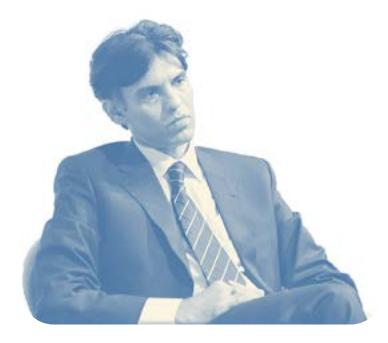
Dr. Abid Qaiyum Suleri is Executive Director of the Sustainable Development Policy Institute (SDPI).