data
Data and Behaviour
Dr. Sanval Nasim ·
← Unveiling Pakistan's Air Pollution
Empowering citizens through data and information
Information is a valued commodity: Lahore residents are willing to pay for reliable air quality forecasts, valuing a three-month subscription for up to PKR 238—roughly the cost of a monthly mobile data plan.
Knowledge empowers action: Providing daily forecasts and a single hour of training significantly improves citizens’ ability to predict pollution and leads to tangible behavioural changes, such as buying N95 masks and altering outdoor activity to avoid peak pollution.
Content is king, but familiarity builds trust: While citizens value useful data regardless of whether it comes from a public or private source, their trust in a specific source grows over time with consistent exposure, highlighting the importance of sustained information delivery.
In the fight for clean air, information is both a shield and a weapon: a shield for citizens to protect themselves from daily harm, and a weapon to demand accountability. Dr. Sanval Nasim presents groundbreaking research from the streets of Lahore, proving that when people are given the truth about the air they breathe, they act. This chapter is a powerful, evidence-based argument for a radical shift in policy: from withholding data to empowering the public with the knowledge they need to survive.
Air pollution poses an immense public health challenge in developing regions such as South Asia, where many cities (such as Lahore, Delhi, Dhaka, Kathmandu) consistently experience some of the worst air quality in the world. The primary pollutant affecting these cities is fine particulate matter (PM2.5), particles small enough to enter the lungs and bloodstream, leading to respiratory illnesses, cardiovascular problems, and shortened life expectancy. In developing cities—which often have limited access to reliable healthcare and advanced pollution mitigation technologies—high air pollution levels place citizens at dire health risks. This can create a vicious cycle where poor air quality hinders economic growth and vice versa, as governments face increasing pressure to balance development needs with demands for greater environmental protection.
Lahore, the capital of Pakistan’s Punjab province and the country’s second-largest metropolis, frequently ranks high on the list of the world’s most polluted cities. Lahore’s air pollution levels consistently exceed both local Pakistani standards and international guidelines set by the World Health Organization (WHO), posing severe health risks to its 14.4 million residents. PM2.5 levels in Lahore surpassed WHO-recommended safe levels nearly
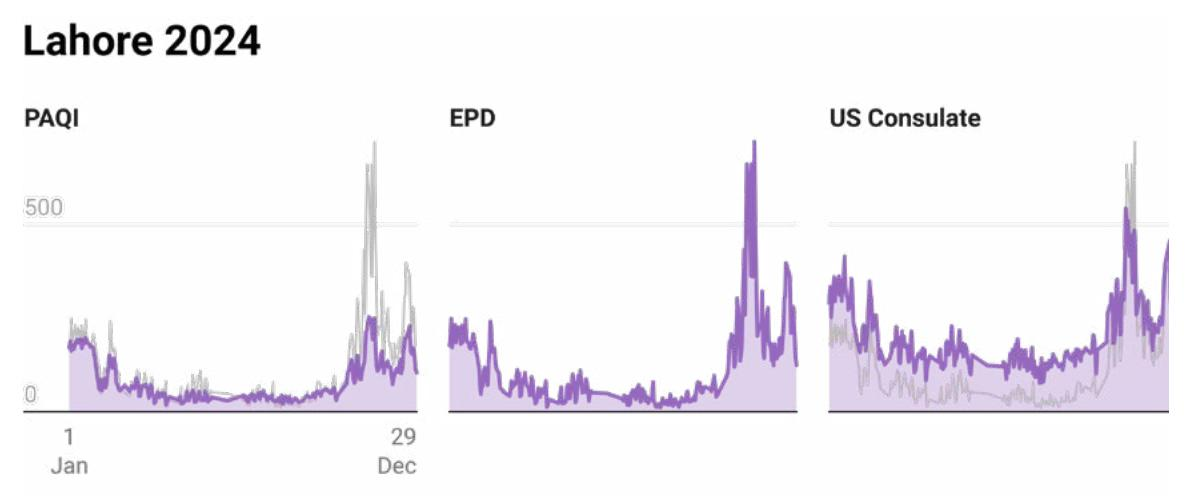
Exhibit 18.1: Lahore’s Daily Air Quality Reality (Feb-Aug 2023). This chart shows the daily PM2.5 levels recorded by three different monitoring networks in Lahore: 1) United States Consulate, Lahore (blue trend line); 2) Pakistan Air Quality Initiative (PAQI; orange trend line); and 3) Environment Protection Department Punjab (EPD; green trend line). It reveals two critical truths: the air consistently and dramatically exceeds WHO’s safe guideline (black line), and there is significant variation between different data sources, highlighting the challenge citizens face in accessing a single, reliable source of information.
every day during the observed period (February-August 2023). This extreme exposure has profound health consequences, contributing significantly to premature deaths and reducing the quality of life for millions. Achieving a reduction in Lahore’s PM2.5 levels to meet WHO’s stringent guidelines could potentially add up to 7.5 years to the average resident’s life expectancy. Beyond such direct health impacts, air pollution also adversely affects cognitive development, educational outcomes, and overall productivity, making it a high-cost, multifaceted problem demanding urgent policy attention.
Information as a public health tool
While addressing the root causes of air pollution requires large-scale, long-term policy interventions—such as abating industrial emissions, transitioning to cleaner energy sources, and improving urban planning and transportation systems—providing the public with timely and reliable air quality information can serve as a crucial tool for mitigating the immediate health effects. Access to such information encourages beneficial behavioural adaptations. For instance, informed citizens may choose to invest in protective goods such as N95 masks (specifically designed to filter fine particulates) or strategically adjust their daily schedules and activities, such as minimising outdoor exertion during peak pollution times.
However, a significant challenge in cities like Lahore lies in the often inconsistent availability and perceived quality of air quality information.1 Public authorities may struggle to install and maintain the extensive infrastructure required for accurate, real-time air pollution monitoring and effective, widespread data dissemination. This can leave large segments of the population uninformed about daily risks and unprepared to take protective measures
Our findings suggest that the content of the forecasts, rather than the specific source providing it, was the primary driver of their demand. Residents appear to value access to reliable data perceived as useful for reducing health risks, regardless of its origin.
against hazardous air quality. Community initiatives, such as the Pakistan Air Quality Initiative (PAQI), have worked to narrow this information gap by providing real-time data via social media platforms and mobile applications. Yet, important questions persist regarding the level of public trust in different information sources (public vs. private) and the extent to which citizens are willing to pay to receive reliable air quality data.
Here, key findings from two Randomised Controlled Trials (RCTs) have been synthesised. An RCT is a research method involving randomly assigning participants to different groups to test the causal effect of an intervention. These RCTs broadly explore how providing air pollution information (specifically, forecasts), attributing it to different sources, and offering brief skills training impacts citizens’ behaviour, their beliefs about pollution, and their willingness to pay for pollution avoidance measures. These studies offer critical insights into how enhancing access to air pollution information and improving the public’s forecasting ability can empower residents to make more informed decisions to protect their health.
Proof of concept: valuing forecasts and skills
The first RCT experimentally tested whether Lahoris value air quality forecasts and how the provision of daily forecasts and brief training could enhance their
forecasting skills and influence pollution avoidance behaviours.1
We developed a model to forecast daily PM2.5 levels using a combination of real-time air pollution data from the US Consulate monitor in Lahore and two distinct satellite data sources. These daily forecasts were then disseminated via SMS messages to a randomly selected sample of roughly 1,000 participants over an eight-month period. Additionally, a subset of these participants received a one-hour, in-person training session focused on basic forecasting techniques. This training, drawing on principles from behavioural economics and cognitive psychology, aimed to reduce common judgmental errors that often hinder individuals from making accurate predictions based on available data.
The primary research questions were: whether citizens value air pollution forecasts; can targeted forecasting training improve their ability to forecast air pollution; and how do these forecasts influence behaviour (particularly demand for N95 masks and pollution avoidance across time).
Citizens highly value air quality forecasts
We found compelling evidence that residents significantly valued receiving air quality forecasts. Using an incentivised mechanism designed to elicit truthful valuations, participants indicated a willingness to pay an average of PKR 93 to continue receiving the daily SMS forecasts for an additional three months (Exhibit 18.2). This amount, while modest in absolute terms, represented approximately 60% of the prevailing monthly cost of basic 4G mobile internet access at the time, underscoring the perceived importance and utility of air quality information, even among low-income populations with limited discretionary funds.
Training improves forecasting accuracy
The study further revealed that both receiving the SMS forecasts and participating in the brief in-person training session led to measurable improvements in participants’ ability to predict near-term pollution levels. Participants in these treatment groups reduced their average error in predicting next-day PM2.5 levels by approximately 5 micrograms per cubic metre (µg/m³). This reduction is noteworthy, representing about 20% of WHO’s recommended safe 24-hour exposure limit (25 µg/m³ at the time of the study). Importantly, these improvements in forecasting accuracy persisted for several months after the initial training, demonstrating that even short, relatively low-cost educational interventions can equip individuals with durable skills for anticipating air pollution risks.
Information changes protective behaviours
We also observed tangible behavioural changes resulting from our interventions. Providing forecasts increased residents’ demand for N95 particulate-filtering masks; those who received forecasts were willing to pay approximately 5% more for these protective masks compared to participants in the control group who did not receive forecasts. Furthermore, residents receiving forecasts demonstrably adjusted their daily outdoor activities based on the predicted pollution levels. They increased their time spent outdoors by about 16% on days forecasted to be relatively clean, while correspondingly reducing their outdoor time by about 3% on days predicted to have higher pollution levels. These behavioural adaptations were particularly pronounced among individuals who had expressed greater concern about air quality before the study began.
Who to trust? The source vs. the signal
In the second RCT, my co-authors and I investigated whether the source of air quality information affects citizens’ willingness to pay for it and their beliefs about its reliability.2 In developing cities like Lahore, air quality data often originates from both public agencies (like the EPD) and private initiatives (like PAQI). However, little was previously known about public perceptions of these different sources.
We conducted this experiment with a sample of 1,000 residents from a lower-middleincome neighbourhood in Lahore. Participants were randomly assigned to receive identical daily air pollution forecasts (created by averaging real-time data from both EPD and PAQI
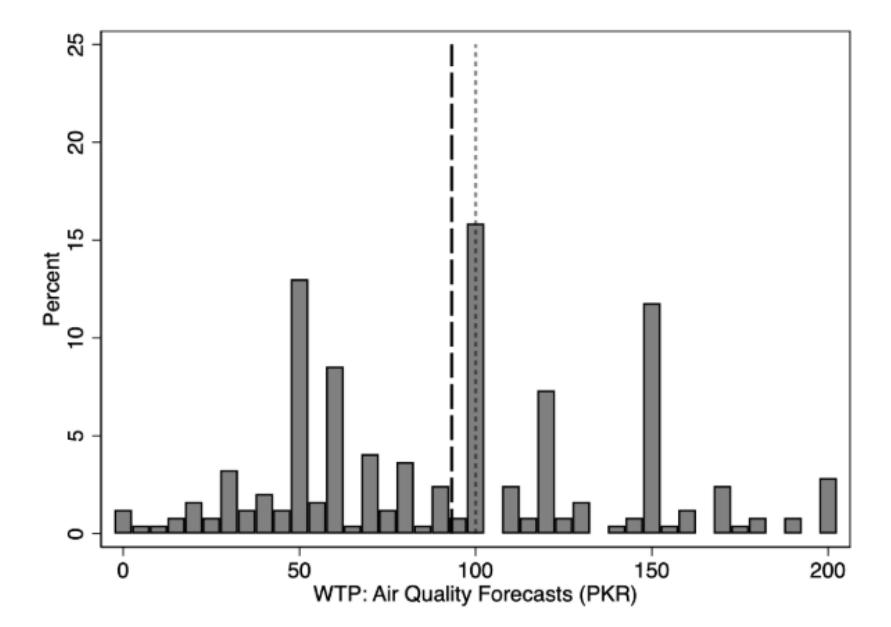
Exhibit 18.2: The Value of a Forecast. This chart demonstrates a clear public demand for air quality information. On average, residents were willing to pay over PKR 93 for a three-month subscription to daily SMS forecasts, a significant amount for low-income households, proving that such data is not a luxury but a valued tool for health protection.
sources), but we experimentally varied the attributed source. One group was told the forecasts came from the public agency (EPD), while the other was told they came from a private initiative (PAQI). This design allowed us to isolate the effect of the perceived source on participants’ willingness to pay for continued forecast access and their beliefs about air quality conditions.
Content matters more than source for value
Participants were willing to pay PKR 238 on average for a three-month subscription to the air pollution forecasts—an amount roughly equivalent to the cost of monthly prepaid mobile phone and data services, and slightly higher (even after adjusting for inflation) than the valuation found in the first RCT. Crucially, however, we found no statistically significant difference in willingness to pay between participants who received forecasts attributed to the government source (EPD) and those who received forecasts attributed to the private source (PAQI). This suggests that, for the residents in our study, the informational content of the forecasts, rather than the specific source providing it, was the primary driver of their demand. Residents appear to value access to reliable data perceived as useful for reducing health risks, regardless of its origin.
Trust varies by source but doesn’t affect demand
Although willingness to pay was similar across groups, participants’ stated beliefs about the accuracy of the forecasts did differ based on the attributed source. Those who received forecasts attributed to the EPD anticipated, on average, a 12% higher margin of error compared to those who received forecasts attributed to PAQI, indicating greater skepticism towards the government-provided data. Despite this difference in perceived accuracy, participants were still willing to pay the same amount for forecasts from either source. This reinforces the finding that the public places a high value on the mere availability and potential utility of air quality information, even if they harbor some doubts about its precision depending on the provider.
Familiarity influences trust
The experiment also revealed an interesting dynamic regarding trust over time. At the beginning of the study, most participants expressed relatively balanced preferences when asked to allocate hypothetical funds towards improving monitoring by either EPD or PAQI.
Dr. Nasim provides compelling evidence that accessible air quality information is a valued public health tool, offering practical policy recommendations for information dissemination strategies that can help mitigate exposure risks while longer-term pollution reduction efforts are underway.
However, after receiving daily forecasts attributed to one specific source for two months, participants showed an increased preference for funding the source they had been assigned to (Exhibit 18.3). This suggests that familiarity and repeated exposure to information from a particular source can influence users’ trust and preferences over time.
A blueprint for an informed public
The findings from these two RCTs offer important policy lessons for developing cities like Lahore, which grapple with hazardous air quality affecting millions daily. These insights suggest several practical approaches to help mitigate the health impacts of air pollution while longer-term structural solutions to reduce emissions at the source are pursued.
Expand access to reliable air quality information
Our studies clearly show that citizens significantly value air quality forecasts and are willing to pay for them, even in low-income settings. Public-private partnerships could be explored to scale up air quality monitoring and forecasting efforts cost-effectively. Given the high expense associated with regulatory-grade monitors, leveraging data from existing credible sources (like consulate monitors or validated private networks) and integrating information from calibrated low-cost sensor networks may offer viable interim solutions to increase data coverage.
Focus on information availability rather than worrying excessively about the source
While trust levels may vary, our findings indicate that the source attribution did not significantly affect citizens’ demand for the information itself. Policymakers should prioritise ensuring that citizens can easily access timely air quality data, regardless of whether it originates from government agencies or reputable private organisations. Utilising multiple dissemination channels—SMS, mobile apps, social media, traditional media—is important to reach diverse demographic groups effectively.
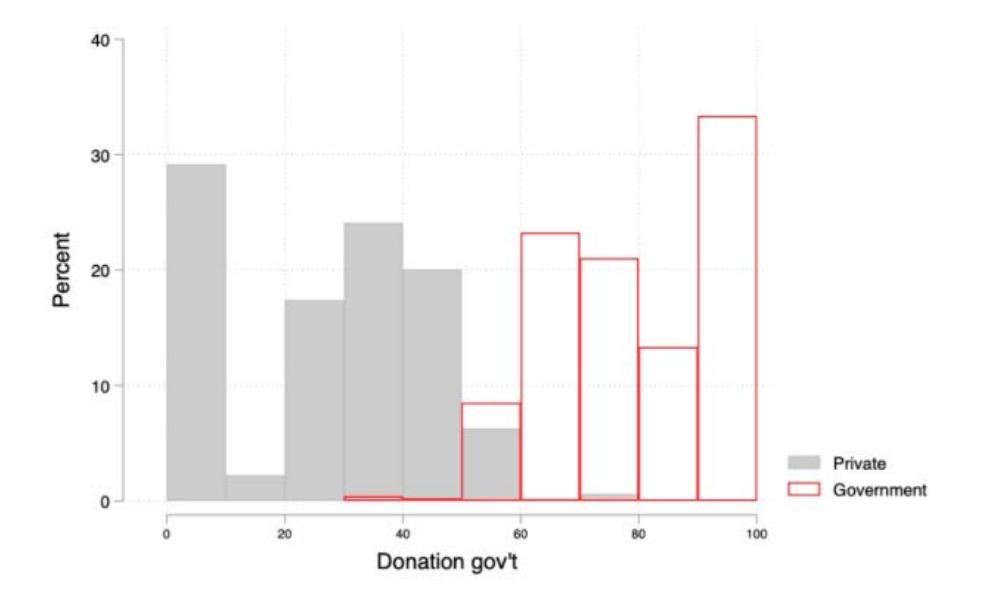
Exhibit 18.3: How Familiarity Builds Trust. This exhibit shows how repeated exposure to information from a specific source influences public trust. Participants who received forecasts attributed to the government (EPD, red bars) were more likely to allocate hypothetical funds to it over time, and the same was true for those who received forecasts attributed to a private source (PAQI, grey bars).
Implement scalable forecast training programmes
The demonstrated success of our relatively brief, low-cost forecast training intervention highlights the potential for scalable programmes to durably improve residents’ ability to understand and anticipate air pollution levels. Similar training modules could be developed and disseminated through digital platforms, such as instructional videos or interactive mobile applications, potentially reaching a much larger audience at minimal cost. Even modest educational interventions can empower citizens with lasting skills to better navigate air pollution risks.
Promote protective behaviours and the use of avoidance goods
The observed increase in demand for N95 masks following the provision of forecasts suggests that targeted public information campaigns can effectively encourage the adoption of protective measures during high pollution episodes. Strategies combining widespread information dissemination with possibly modest subsidies for essential avoidance goods like certified masks could significantly mitigate acute health risks. Mobile technologies, given their increasing penetration even in lower-income areas, offer a powerful and cost-effective channel for delivering both information and behavioural nudges to broad audiences.
These information-based approaches can serve as valuable, cost-effective, and immediately implementable interventions while the more complex and resource-intensive work of reducing pollution at its sources continues. By empowering citizens with the information and skills needed to protect themselves, cities like Lahore can significantly reduce the immediate health burden of air pollution, even as they strive towards achieving cleaner air in the long term. The evidence clearly demonstrates that information access is not merely an issue of transparency—it is a potent public health tool capable of changing behaviour in ways that meaningfully reduce exposure to harmful pollution.
As Pakistan continues to develop and refine its comprehensive air quality policies, ensuring robust, accessible, and reliable information systems should be considered an essential and integral component of the overall national strategy. Because a public that is informed is a public that is empowered to protect itself and demand change.
Dr. Sanval Nasim is Assistant Professor of Economics at Colby College. His research broadly focuses on the environment, climate change, and political economy.
Footnotes
-
Ahmad, Husnain F.; Gibson, Matthew; Nadeem, Fatiq; Nasim, Sanval; Rezaee, Arman. (2024). Expectations and adaptation to environmental threats. https://doi.org/10.26085/C3K88B ↩
-
Imtiaz, I. (2025). Beliefs, signal quality, and information sources: Experimental evidence on air quality in pakistan. https://doi.org/10.26085/C3FG6D ↩