politics
Politics and Policies
Imran Saqib Khalid ·
← Unveiling Pakistan's Air Pollution
A cycle of failure: For 20 years, Pakistan’s air quality policy has been a “vicious cycle” of court orders leading to commissions that produce recommendations, which are then adopted into policies that are ultimately not implemented, leading back to crisis.
The implementation gap: Despite a robust legal framework dating back decades, a persistent lack of political will, fragmented institutional responsibility, and weak enforcement have rendered most policies ineffective.
Action vs. optics: The official response to severe pollution often defaults to token, unscientific actions like road-washing, highlighting a deep-seated reluctance to tackle the primary sources—transport, industry, and fuel quality—identified in policies for years.
When the official response to a public health emergency is to wash the roads, it signals a profound disconnect between science, policy, and politics. Dr. Imran Saqib Khalid dissects that disconnect. This chapter provides a critical history of Pakistan’s two-decade-long struggle with air pollution governance, revealing a vicious cycle of well-meaning policies, institutional apathy, and a persistent failure to implement. It is an essential analysis of why we remain trapped in the smog, and how we might finally break free.
A headline in Dawn newspaper on 10 December, 2023 had me do a double take. It read: “Road-washing drive launched to rid Lahore of smog.” It quoted Mohsin Naqvi, then Chief Minister of the Punjab province as saying, “The washing of roads in Shahdara area will be undertaken tonight. We want either to entirely eliminate dust or at least minimise it. Hopefully, smog will be reduced with the reduction of dust through washing.”1
Consider the above statement in light of the elaborate National Clean Air Policy and Punjab Clean Air Plan, both promulgated earlier in 2023. Consider, too, the plethora of other initiatives to combat air pollution over the years and one gets a sense of ever burgeoning dissonance with respect to science, policy and politics vis-à-vis environmental governance in Pakistan. The statement by the Chief Minister signifies a disconnect with the on-ground reality when it comes to the air pollution crisis in the country.
While Lahore has regularly been listed as one of the most polluted cities in terms of air
pollution, it is not the only Pakistani city to figure in global rankings. Peshawar, Rawalpindi and Karachi, for example, have also comfortably found their spots in the list of top 10 cities with the poorest air quality.
Over the past decade, the political and bureaucratic response to the crisis has been to either reject the air pollution data or blame transboundary sources of air pollution from India for poor air quality locally. In 2018, an official from the Ministry of Climate Change said that “Pakistan’s own contribution” is minimal and that “up to 70% of it could be from across the border”.2
The head in the sand approach to resolving Pakistan’s air pollution crisis has not worked. As the winter dawned in late of 2024, the Air Quality Index across many parts of Pakistan reached hazardous levels with Multan, the erstwhile City of Saints, crossing the 2,000 mark and signifying the scale of the problem facing the country.[^3]
This gap between scientific understanding and political action is particularly troubling given that we now have more robust data than ever before. As detailed in the emissions inventories in this report, we have gained significant insights into the major sources of pollution across Pakistani cities, providing the scientific foundation needed for targeted interventions.
A legacy of laws, a history of inaction
Environmental management has a long history in the country and the region. The history of environmental legislation dates back to pre-Independence days. The Factories Act of 1934 stipulated effective arrangements for proper “disposal of wastes and effluents”. This would entail eliminating burning of solid and/or chemical and hazardous wastes.3
The Pakistan Environmental Protection Ordinance of 1983 first spelled out actionable steps for the protection of the environment, including improving ambient air quality. It was followed soon after with the formation of federal and provincial environmental protection agencies (EPAs).4
A National Conservation Strategy was conceived in 1992 following a detailed stakeholder engagement process. Among various other environmental issues, it provides a detailed overview of air pollution and its sources. Moreover, it provides an in-depth analysis of what needs to be done to counter industrial and vehicular air pollution.
In 1997, the Pakistan Environmental Protection Act (PEPA) was promulgated. Thereafter, following the devolution under the 18th Amendment in 2010, the four provinces adopted the Act while PEPA 1997 continues to be in vogue for Islamabad Capital Territory.5
[^3]Gabol, I. (2024). Punjab doubles restrictions as Multan AQI tops 2,000. Dawn.com.
The Act specifically prescribed measures to counter environmental pollution, which entail: “The contamination of air, land or water by the discharge or emission of effluent or wastes or air pollutants or noise or other matter which directly or indirectly or in combination with other discharges or substances alters unfavourably the chemical, physical, biological, radiational, thermal or radiological or aesthetic properties of the air, land or water, or which may, or is likely to make the air, land or water unclean, noxious or impure or injurious, disagreeable or detrimental to the health, safety, welfare or property of persons or harmful to biodiversity.”
The PEPA empowers the federal and provincial Environmental Protection Agencies to enforce the Act as well as the National and Provincial Environmental Quality Standards (PEQS) and the National Ambient Air Quality Standards (NAAQS). The Environmental Protection Act set up Environmental Tribunals whose responsibility is to support the Environmental Protection Agencies. In addition, under the “pollution pays” principle, pollution charges have also been employed by the Environmental Protection Act to address this issue. Yet, as highlighted by Habib et al, the rules regarding pollution charges “have remained dormant since their inception”.6
The federal and provincial Environmental Protection Agencies are overseen by statutory bodies called Environment Protection Councils. Ostensibly high level and representative, with presence of not only the Prime Minister or Chief Minister but also stakeholders from government and the civil society, these Environment Protection Councils are conspicuous by their absence. From 2000 to 2010, prior to devolution, the Pakistan Environmental Protection Council was rarely convened even though it was mandated to meet twice annually. The record for its provincial counterparts, post devolution, has been equally abysmal in this respect.7
This historical trajectory reveals that Pakistan has built a substantial legislative framework for environmental protection over decades, yet the practical implementation of these laws has remained a persistent challenge. The disconnect between policy formulation and enforcement has its roots in this history of institutional neglect and insufficient political commitment.
The implementation gap: why policies fail
The promise and pitfalls of past initiatives
In 2008, Pakistan launched the Clean Air Programme (PCAP) which aimed to address the air pollution problem across the country. It entailed a list of interventions that included, but were not limited to, vehicular pollution, industrial emissions, burning of solid waste, and natural dust. The Programme also called for development of an air pollution regulatory framework or a set of legal stipulations to address air pollution. It called for a central apex organisation to serve as a coordination mechanism to manage “intergovernmental and intersectoral coordination” between and amongst the provinces and centre. Furthermore,
it recommended that enhanced air quality management (AQM) policies be designed with focus on building human resources capacity. Finally, it called for an investment in an effective air quality monitoring programme to understand the scope and scale of the problem, and the strengthening of judiciary bodies so that they are able to address environmental issues appropriately.8
It seemed that the government was finally on track to deliver on its promises. One of the key interventions following the promulgation of the PCAP was the role of Japanese International Cooperation Agency (JICA) in assisting the Government of Pakistan in developing an air quality monitoring network. Fixed and mobile air monitoring stations were set up in provincial capitals and a data centre and a central lab was also opened. It fell
Policies beget policies and commissions and committees beget some more commissions and some more committees. Meanwhile the onground situation remains tentative.
to the provincial and federal EPAs to operate the monitoring units and develop plans to address air quality issues locally.
The lack of capacity within the EPAs meant that outside consultants had to be hired and trained by JICA to operate the monitoring stations. This, however, was a short term measure with the aim being that soon after, the federal and provincial EPAs will be able to run the system on their own. Yet, by the time JICA ended its assistance programme, the EPAs had still not taken control of the operation and maintenance of the programme.
Following the end of the JICA programme, the programme was essentially shut down. Malik Amin Aslam who was the then Minister of State for Environment when the Clean Air Action Plan was launched, would later go on to highlight that with the provincial governments failing to build on JICA’s interventions, the necessary expertise required for the sustainability of the initiative faded quickly as the experts found jobs in the Middle East. Soon thereafter, the monitors were transferred to storage facilities where many sensors were stolen and sold in the open market.
While the National Environmental Quality Standards were first developed in 1993 and then revised (with less stringent stipulations) in 1999, the NEQS for ambient air quality were developed in 2010. Major pollutants outlined in the NEQS for ambient air include sulfur dioxide (SO2), nitrogen oxides (NOx), ozone (O3), suspended particulate matter, fine particulate matter (PM 2.5), lead (Pb) and carbon monoxide (CO).
Since then, the provinces have adopted the standards as-is, with the exception of Sindh, which has watered down the PM2.5 standards. PM2.5 is an extremely hazardous pollutant. The 2.5 refers to the size of the particulate matter in microns or micrometres. The PM2.5 pollutants are so fine that they can find their way into lungs and enter the bloodstream resulting in—and exacerbating—respiratory and cardiovascular disease. The PM2.5 standard across Punjab, Khyber Pakhtunkhwa, Balochistan and at the federal level is 15
ug/m3 for 24 hours and 35 ug/m3 for annual average. Meanwhile, Sindh Environmental Quality Standards for ambient air stipulate 40 ug/m3 for 24 hour average and 75 ug/m3 for annual average.
These standards are not in line with World Health Organization standards. In 2005, WHO had set the annual average for PM 2.5 at 10 ug/m3 and the 24-hour average at 25. When Pakistan’s ambient air quality standards were being developed, the Government of Pakistan chose to relax the stipulated guidelines. On what basis did Pakistan relax these guidelines is a question that needs to be addressed.
Moreover, what is equally concerning are the diluted standards for Sindh. The provincial governments were all quite aware of the deepening air pollution crisis across the country while promulgating these guidelines. Yet, environmental protection and the corresponding impact on citizens’ health was not on their priority list. It can be speculated that initiatives such as the China Pakistan Economic Corridor (CPEC) with its focus on developing coal powered plants in Sindh resulted in weakened stipulations for the province. Here, the role of the Provincial Environmental Protection Council needs to be questioned as well since its approval was required to amend the existing regulations.
These are questions that will need answering if we are to holistically understand the reasons for the gap in global guidelines and local ones. WHO revised its standards in 2021, with the annual average at 5 ug/m3 and the 24-hour average at 15 ug/m3. The United States Environmental Protection Agency (US-EPA) followed WHO by reducing its annual average for PM2.5 from 12 ug/m3 to 9 ug/m3.
Standards and enforcement: a persistent disconnect
The 18th Amendment passed in 2010 was to be the harbinger of a new beginning for environmental protection in Pakistan. Yet, as the management of the air pollution crisis shows, it merely ended up highlighting the dire state of apathy with respect to governance and decision making.
By 2015, Pakistani cities were regularly being highlighted at the top of “Most Polluted Cities” listings.10 For example, a WHO database of PM2.5 pollution listed Karachi, Peshawar and Rawalpindi in the top 10 polluted cities. Lahore, which would eventually be near the top of such lists in the coming years, was conspicuous by its absence. This, primarily, had more to do with inadequate or perhaps even complete lack of data rather than air pollution mitigation measures by the city’s government.
In fact, with the spread of portable air monitoring by the Pakistan Air Quality Initiative (PAQI), for example, and the setting up of air monitoring units at US Consulates across Pakistan (including Lahore), the city was soon to find itself close to the top in all future rankings. This led to global media attention focusing on Lahore and the city finding itself in an unflattering limelight. Politicians and bureaucrats would take turns blaming air pollution on transboundary sources from across the border or simply deny that there was an air pollution problem to even begin with. The efficacy of portable monitors was called into question by government officials.
At one event in Islamabad in 2019, the author personally witnessed a very senior official of the EPA calling the setting up and broadcast of air pollution information in the capital city by the US Embassy “a step against the sovereignty of Pakistan”. Meanwhile, social media posts would regularly highlight the air pollution quality levels from across the country.
With the government having receded into its shell and not imparting real time air quality information, the portable monitors indicated the air pollution crisis was unfolding not only in Lahore but across Pakistan.
Dr Imran Saqib Khalid navigates the historical landscape of environmental legislation, critiques institutional weaknesses, and examines the sociopolitical dynamics including misplaced economic priorities and political volatility—that have historically undermined sustained action.
The vicious cycle: commissions, data, and denial
The lack of reliable official data has historically undermined policy effectiveness. However, the recent development of comprehensive emissions inventories for major Pakistani cities, as detailed earlier in this report, represents a significant breakthrough. These inventories provide the scientific foundation that has long been missing, identifying the relative contributions of various sources from transport and industry to residential and agricultural activities. This data could serve as the cornerstone for more targeted and effective interventions if properly integrated into the policy process.
The mid 2010s also saw an enhanced interest by media entities vis-à-vis environmental degradation in Pakistan. The 2015 Paris Climate Agreement had recently been promulgated and the general public was interested in learning more about the state of the environment in the world, and more so at home, in Pakistan. Each global ranking that saw Pakistan near the top of pollution charts saw more interest by print and television media in the country. Along with the burgeoning social media interest in these issues, the federal and provincial governments particularly Punjab—had to face questions as to the efficacy of mitigation measures.
In December 2017, the then Chief Justice of Lahore High Court, Mansoor Ali Shah formed the Smog Commission to formulate a “smog policy for Punjab which identifies the root causes and prescribes a plan to protect and safeguard
the life and health of the people of Punjab”. Dr Parvez Hassan was made Chairperson of the Commission which included various environmental, technical and legal experts, and practitioners.
Perhaps not so ironically, the final report of the Commission notes that the Lahore High Court had similarly appointed a Lahore Clean Air Commission in 2003, also under the chairmanship of Dr Parvez Hassan, and that many recommendations of that Commission “remain relevant in this Report of the Smog Commission”. This statement highlights the vicious cycle of environmental decision-making in the country.9
In other words, while there may be no need to reinvent the wheel, we still try to do it anyway because we have no institutional memory. This would be ironic and perhaps even funny if it were not for the cost in human life and suffering that results from an apathetic approach to persistent public policy problems such as air pollution.
Needless to say, six years after the Smog Commission report, and 21 years following the Lahore Clean Air Commission report, we are no closer to addressing the smog in Lahore or air pollution across Pakistan. What we do have are political actors with little understanding of environmental problems facing our communities looking for photo ops and headlines, all the while undermining any efforts to address the issues in a holistic manner.
It is important to link source emissions to ambient air quality standards so as to address air pollution at the individual source or facility level (unit level), e.g., when it comes to specific industries. However, the provincial EPDs have not disclosed the method through which they are scientifically measuring industrial emissions so as to be in line with regulations. This poses an important question about the process through which emission standards are developed and whether they have been developed through an informed and collaborative process.
Breaking the cycle: understanding barriers to effective implementation
A number of provincial and national level policies that aim to address air quality woes in the country have been promulgated. These include the Punjab Smog Mitigation Plan in 2024,12 National Clean Air Policy in 2023, Punjab Clean Air Policy in 202313 and the Smog Commission Report in 2018. This is in addition to the Pakistan Clean Air Programme in 2008. Furthermore, given that air pollutants fall under the category of Short-Lived Climate Pollutants (SLCP), even the Climate Change Policy 2014 (revised 2021) and the Nationally Determined Contributions (NDCs 2021) highlight mechanisms to bridge the gap between ambition and inaction.
Yet, what begs the question is continued failure of policy interventions to make a difference on the ground. Recent research is unequivocal in highlighting the complex nature of policy making and implementation. Surely, policy making and its promulgation is the easy part. The questionable aspects come to the fore in regard to implementation—or lack thereof of the said policies.
Policies beget policies and commissions and committees beget some more commissions and some more committees. Meanwhile the on-ground situation remains tentative. Consider that a quarter century has passed since the Environmental Protection Act was promulgated and we are still discussing the lack of apportionment studies and inadequate monitoring of air quality across the country. By the same token, focus on Lahore alone is a disservice to communities who are affected by air pollution across the country.
[^12]Government of the Punjab (2024). Chief Minister Punjab’s Roadmap for Smog Mitigation in Punjab 2024-2025.
What is required, in essence, is the need to focus on collaborative and deliberative policy making that does away with a siloed approach to efforts to engage environmental governance. This entails concerted efforts to engage with affected communities, scientists and practitioners, elected officials, bureaucrats and civil society at large.
This will ensure buy-in and salience when policies are eventually developed. A policy developed in closed environs with little insight from all the stakeholders is bound to fail. Moreover, policy making is a continual process whereby such engagement needs to happen frequently so as to inform the policy implementation process. Of course, this is a time-consuming process and given the time-sensitive nature of bureaucratic postings and political process, it is largely ignored, and at great peril to the health and wellbeing of the people in this country.
Another key issue is the dispersed nature of environmental governance. The disparate and ad hoc approaches to addressing air pollution problems in Pakistan have gained salience after the 18th Amendment, with Exhibit A being the lack of uniformity in air quality standards. In this regard, a holistic evaluation of the federal nature of environmental protection laws needs to be done so as to chart the way forward for effective mitigation of air pollution across the country.
The political cycle and its quirks also deserve a mention here. Elected officials tend to downplay the impacts of a complex policy issue primarily because its resolution would likely surpass their tenure and as such, may have implications on their political future come election time. This can lead to development of policies without enhanced stakeholder engagement, which leads to ineffective measures to address the air pollution crisis.
Policy tracking in terms of analysing the performance of organisations in implementing the relevant policies, addressing potential problem areas, and re-assessing policies and plans are essential to effective environmental governance. Yet, here too as has been discussed above, we have been lacking severely. Thus, policies have not been aligned with national level political decision making, resulting in a truncated vision in terms of addressing the country’s air pollution woes.
Integrating approaches: lessons in collaboration
Air pollution is a global concern. While examples from the Global North abound in terms of how developed countries were able to address air quality issues, we now have the benefit of the experience of developing countries too—in terms of how they have successfully approached or are approaching the problem, particularly in terms of collaboration or partnership between various stakeholders.
It starts with acknowledging the problem and developing an understanding of its scope and scale. Here, the government can rely on universities, not-for-profit entities and even citizens to understand the extent of the air pollution woes affecting the country. This would entail not only understanding the state of air quality in the country but also identifying sources of pollution via source apportionment studies. Next, we need to align our air quality standards with those of the World Health Organization, which is indeed the gold
Needless to say, six years after the Smog Commission report, and 21 years following the Lahore Clean Air Commission report, we are no closer to addressing the smog in Lahore or air pollution across Pakistan. What we do have are political actors with little understanding of environmental problems facing our communities looking for photo ops and headlines, all the while undermining any efforts to address the issues in a holistic manner.
standard when it comes to criteria that cater to public health. Once we have identified the scope, scale and nature of the problem, the next step would be to address it in a manner that hinges upon collaborative and integrative approaches. Command and control decision making seldom results in enhanced environmental decision-making, as we have seen in the case of stubble burning. This requires a concerted effort that emphasises consensus development through effective environmental communication.
Integrated approaches to planning can be witnessed in places like Bogota, Colombia where nearly 3000 people die prematurely due to PM2.5 air pollution. Vehicular pollution contributes heavily to this. As such, the city is implementing the ‘Barios Vitales’ or ‘vital neighbourhood’ strategy under which five neighbourhoods are being redesigned with the aim to minimise vehicle use, centralise resources and encourage walking and use of bicycles. In order to ensure that this initiative succeeds, the city developed a comprehensive engagement strategy with community members and other stakeholders. It included focus group discussions, perception surveys and cocreation exercises so as to develop a holistic initiative.10
Another example from Latin America is Mexico’s Guadalajara metropolitan area which suffers from high air pollution levels. The Metropolitan Planning Institute of Guadalajara (IMEPLAN) came together with World Resources Institute (WRI) Mexico and the State of Jalisco to develop a detailed integrated emissions inventory which identifies the sources of air pollution in the region. The tool plays an instrumental role in calculating and compiling estimates of emissions which are most significant for improving air quality as well as reducing pollutants that contribute to global warming.
The inventory served as a baseline for WRI as it evaluated how a new bus rapid transit (BRT) line in the region will impact air quality. It was determined that “if truck traffic were replaced with travel on the new BRT line (that uses buses with the latest Euro VI low emission technology), the region could avoid about 27 pollution
related cardiovascular deaths and around 715 lost workdays in the year 2030”.15 This is a very practical example of how data sets can be utilised to effectively inform local level planning. It can go a long way in addressing air quality issues in Pakistan and other parts of South Asia.
Pakistan now has a similar opportunity with the newly developed emissions inventories presented in this report. These inventories provide exactly the kind of scientific foundation that enabled successful interventions in places like Guadalajara. By integrating this data into the policy process, Pakistani authorities could similarly model the health and economic impacts of specific interventions, prioritising those with the greatest potential benefits.
Data availability and reliability remains a point of contention in Pakistan. However, there are global case studies that can help bridge this longstanding gap. Take the example of City AQ—a partnership between WRI, NASA Global Modeling and Assimilation Office and a number of cities including Addis Ababa, Bogota, Jakarta, Kigali, Monterrey, Guadalajara and Sao Paulo—which uses emissions inventories, satellite imagery and local air quality data and machine learning to provide local air quality forecasts. The information allows cities to address potentially hazardous conditions and communicate with the general public in a timely manner. It also allows local governments to anticipate and address air quality concerns on the basis of scientific information.11
Transboundary air quality management is yet another area where Pakistan and other countries in South Asia can learn from best practices in other regions of the world. The Malé Declaration on Control and Prevention of Air Pollution and Its Likely Transboundary Effects for South Asia was adopted in 1999 by eight countries of South Asia.17 It remains dormant. In this regard, we can learn from the Tripartite Policy Dialogue on Air Pollution (TPDAP)—which brings together Japan, Republic of Korea and People’s Republic of China on an annual basis to exchange information on air pollution mitigation and develop initiatives for cooperative engagement. Earlier in 2024, the 11th Policy Dialogue was held. The Dialogue was set up in 2013 during a Tripartite Environment Ministers meeting among Korea, China and Japan (TEMM), formed in 1999.12
Another example is the efforts by ASEAN member states to promote regional collaboration with the aim to address transboundary haze pollution from land and forest fires. Initiatives include formation of the Regional Cooperation Plan on Transboundary Pollution (1995),13 Regional Haze Action Plan (1997), ASEAN Agreement on Transboundary Haze Pollution ratified by all countries in 2015.20 In 2016, the Roadmap on ASEAN Cooperation towards Transboundary Haze Pollution Control with Means of Implementation was adopted.14
[^15]Orloff, M., & Anzilotti, E. (2023). How data and integrated planning approaches can help cities fight air pollution. Shift Cities.
These various agreements have been listed here to highlight the progression in terms of policy dialogue over a period of over 20 years, such that each subsequent step is more comprehensive in terms of addressing the issue. Pakistan could adapt these regional cooperation models to revitalise the dormant Malé Declaration and establish more effective transboundary coordination in South Asia.
Beyond rhetoric: a framework for accountability
Air pollution has taken on crisis level proportions in Pakistan. However, the response has not been in line with the nature of the crisis. Ad hoc decision-making in this realm has resulted in enhanced risk for vulnerable segments of society including the children, the elderly and the ill. Often, they are the voiceless.
Indeed, what we are faced with is a social justice issue. As the discussion above shows,
While most government actions have remained concentrated on Lahore and Punjab, recent years have seen growing awareness of the need to monitor, understand, and regulate rising air pollution levels in other cities and provinces, and indeed, at the national level.
policy making is the easy part of the equation. In fact, the plethora of policies and plans that purport to cater to air pollution should be a cause for concern. This depicts a gap in comprehending the scope and scale of the problem leading to public policy responses that are laughable at best and dangerous at worst. Dangerous because they can lull us into thinking that we are doing something to truly address the issue, and not going around in circles—which seems to be the reality that we have been living with over the past 20 years with not much having changed for the better.
But we need not lose heart as all is not lost. The examples from around the world cited earlier highlight cases from the local to the regional level, where a broad array of stakeholders come together to address the complex environmental issue that air pollution is.
Continual improvement is emphasised and mechanisms are developed in a way so that progressive advances can be made in terms of mitigation efforts. The timelines at play do not cater to finances, political differences, administrative issues and personal conflicts as much as they account for them. It is understandable that policy making entails these concerns yet the greater public good demands that none of them are singularly or jointly able to short circuit the policy implementation process.
The iterative nature of decision making on display elsewhere needs to be replicated in Pakistan with the aim to holistically address the policy-implementation gaps. To make meaningful progress, Pakistan should take these three immediate steps:
- Establish an independent air quality monitoring and evaluation authority that transcends political cycles, with representation from academic institutions, civil society, and technical experts.
- Integrate available emissions inventory data into all levels of planning, requiring impact assessments of major infrastructure and development projects.
- Create formal mechanisms for stakeholder engagement in environmental decisionmaking, ensuring that affected communities have meaningful input into pollution control measures.
These steps would help break the cycle of perpetual policy development without implementation, creating greater accountability and continuity in Pakistan’s air quality management approach.
The path forward will be time consuming, require resource allocation, and may not yield immediate political benefits, but it will make a difference in the lives of all Pakistanis that are exposed daily to air pollution, especially those who are most vulnerable.
Dr. Imran Saqib Khalid is a climate and sustainability thought leader whose work focuses on regions and communities most vulnerable to environmental degradation and climate change.
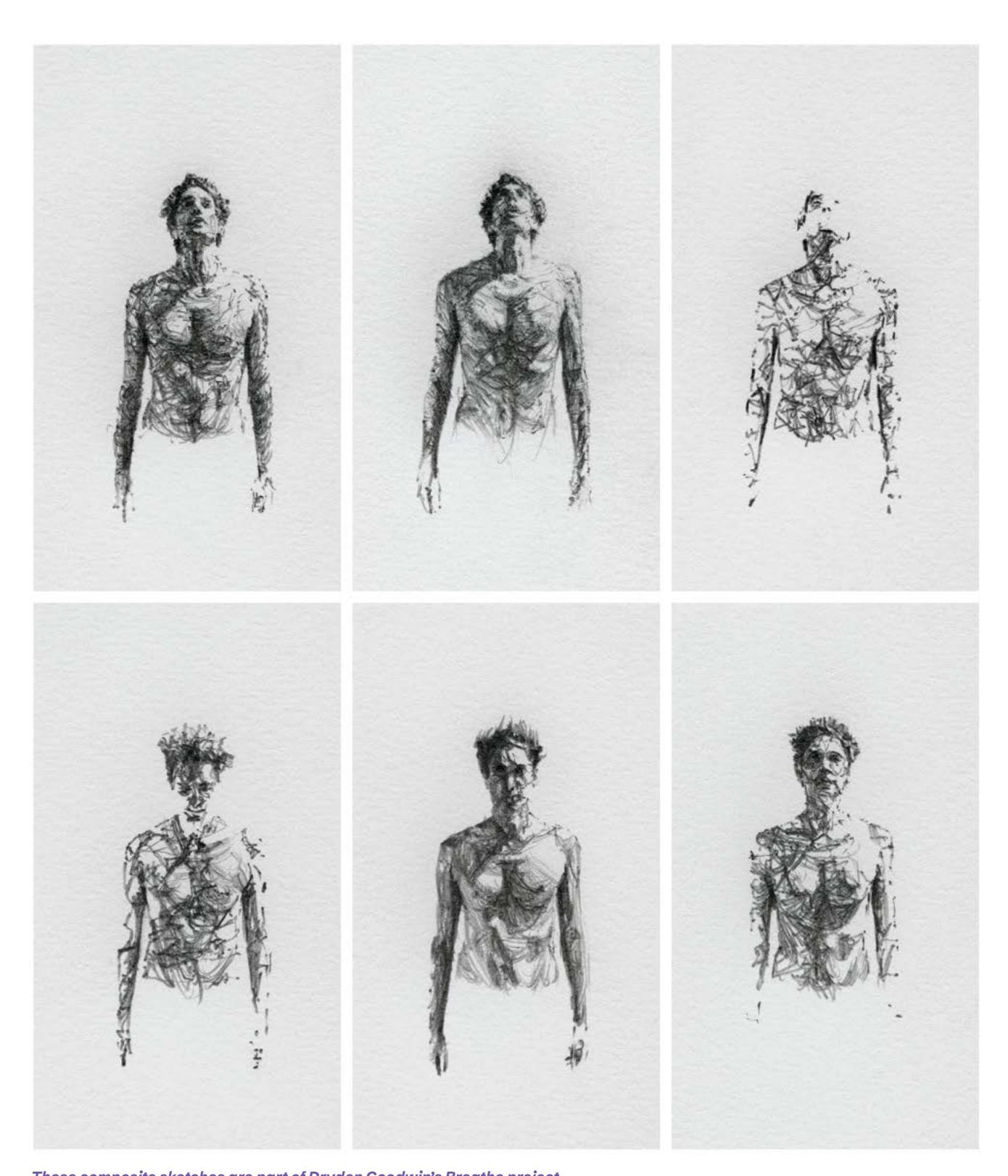
These composite sketches are part of Dryden Goodwin’s Breathe project, which animates the act of breathing to make the invisible visible. By capturing campaigners frame-by-frame, including Rosamund Adoo-Kissi-Debrah (mother of the late Ella Kissi-Debrah) in London and Abid Omar in Lahore, Goodwin connects the personal tragedy of air pollution with the universal fight for a breathable future.
Footnotes
-
Gabol, I. (2023). Road-washing drive launched to rid Lahore of smog. Dawn.com. ↩
-
India responsible for 70 percent smog in Pakistan. (2018, November 12). The News. ↩
-
Government of Pakistan. (1981). Pakistan Environmental Protection Ordinance, 1983. ↩
-
Government of Pakistan. (1997). Pakistan Environmental Protection Act. ↩
-
Habib, A., Malik, A., Pomiankowski, R., & van Gevelt, T. (2021). Charting Pakistan’s air quality policy landscape. International Growth Centre. ↩
-
Pakistan Today (PT). (2011). Toothless Pakistan Environmental Protection Council. ↩
-
The cost of air pollution: strengthening the economic case for action (2016). World Bank. ↩
-
Government of Pakistan. (2018). Report of the Smog Commission: Walid Iqbal vs Federation of Pakistan, Writ Petition No. 34789/2016. ↩
-
Street Experiments Tools (SET). Vital neighbourhoods. ↩
-
Trilateral Cooperation Secretariat. (1999) Tripartite Environment Ministers Meeting (TEMM). ↩
-
ASEAN Co-operation Plan on Transboundary Pollution. (1995). ASEAN Economic Bulletin, 12(1), 89–95. ↩
-
ASEAN. Roadmap on ASEAN cooperation towards transboundary haze pollution control with means of implementation, ASEAN Haze Portal. ↩