power-plants
Power and Pollution
Haneea Isaad ·
← Unveiling Pakistan's Air Pollution
A double burden: Aging thermal power plants around Lahore are a major source of pollution and a significant economic drain, costing the public billions in fixed capacity payments even when they operate infrequently.
The high cost of inefficiency: These plants run on expensive imported fuels and operate at low efficiency, making their electricity among the most expensive in the country and contributing to high consumer bills.
A profitable path to retirement: The economic case for shutting down the oldest, most polluting plants is clear. Retiring them early would save hundreds of millions of dollars in excess payments and unlock existing grid infrastructure for cheaper, cleaner renewable energy.
The smokestacks on Lahore’s horizon are more than just sources of pollution; they are monuments to an outdated and expensive energy system. Haneea Isaad dissects the hidden costs of the city’s aging power plants, revealing a double burden of toxic emissions and economic inefficiency. This chapter presents a clear, data-driven financial case for a strategic energy transition proving that the path to cleaner air is also the path to a more affordable and sustainable energy future.
The electric grid around Lahore is served by a cluster of fossil fuel-based thermal power plants concentrated in three main areas: Sheikhupura, Raiwind, and Balloki. These facilities predominantly operate on furnace oil or natural gas/regasified liquefied natural gas (RLNG), with most plants falling into the middle-aged category (13-15 years old). These aging plants are characterised by low utilisation rates and capacity factors, operating intermittently and inefficiently—with the notable exception of the newly constructed RLNG plants at Bhikki and Balloki, which boast higher efficiency and utilisation rates.
The geographic distribution of these plants creates varying levels of exposure and health risks for nearby populations. While power plants in Sheikhupura and Balloki are situated within industrial zones at some distance from central Lahore, the Raiwind area is more densely populated and serves as a hub for domestic and commercial activities. Consequently, power plants located there pose greater health risks to local residents. Of the three plants operating in Raiwind, it’s worth noting that the generation licenses
| Power plant | Location | Capacity | Date (Age) | Efficiency | Utilisation | Capacity factor |
|---|---|---|---|---|---|---|
| NG/HSD | ||||||
| NPPMCL | Balloki | 1,276 | 2018 (6) | 59% | 72% | 61% |
| QATPL | Bhikki | 1,231 | 2018 (6) | 62% | 65% | 59% |
| Sapphire Electric | Muridke | 235 | 2010 (14) | 51% | 32% | 31% |
| Orient Power | Balloki | 225 | 2010 (14) | 51% | 49% | 35% |
| Halmore Power | Bhikki | 225 | 2011 (13) | 51% | 31% | 30% |
| RFO | ||||||
| Atlas Power | Sheikhupura | 224 | 2009 (15) | 45% | 35% | 32% |
| Nishat Chunian | Qasur | 202 | 2010 (14) | 45% | 46% | 38% |
| Reshma Power | Raiwind | 200 | 2011 (13) | 10-15% | 8-10% | 10-15% |
| Saba Power | Farooqabad | 136 | 1999 (25) | 31% | 16% | 16% |
| Japan Power | Raiwind | 135 | 1994 (30) | 10-15% | 8-10% | 10-15% |
| Southern Electric | Raiwind | 117 | 1994 (30) | 10-15% | 8-10% | 10-15% |
Exhibit 13.1. Characteristics of Thermal Power Plants Around Lahore. Most furnace oil power plants have low utilisation rates, serve peak load demand, or provide reactive power compensation and ancillary services during grid congestion and high demand. According to the USEPA, operating thermal power plants at lower loads or changing loads frequently yields lower efficiency and higher levels of incomplete combustion, resulting in increased ecological emissions and health impacts.
for Southern Electric Power and Japan Power expired in 2019 and 2020, respectively.1 Meanwhile, Reshma Power, initially acquired under a ‘rental’ model has operated only sporadically despite being technically available.2 1
Beyond these larger independent power plants (IPPs), numerous smaller captive power plants (1-5 megawatts) dot the Sheikhupura industrial zone.4 These smaller facilities, typically running on furnace oil or diesel, contribute significantly to environmental emissions and localised air pollution despite their modest size.
The emissions burden: quantifying the impact
The environmental impact of these power plants varies significantly depending on their fuel source and operational efficiency. High-efficiency gas/RLNG-fired power plants
generally produce fewer particulate matter and sulfur oxide emissions, but they still release considerable amounts of nitrogen oxides (NOx) and carbon monoxide (CO) into the atmosphere.5
In contrast, furnace oil or diesel-based power generation facilities emit large volumes of sulfur oxides (SOx), volatile organic compounds (VOCs), and NOx—prime contributors to acid rain and smog formation.6 These emissions are widely associated with numerous respiratory and cardiovascular diseases, with amplified health impacts on children and individuals with pre-existing respiratory conditions. All fossil fuel-based plants also emit significant volumes of carbon dioxide (CO2), the leading greenhouse gas driving climate change.
Most furnace oil power plants in the region operate at low utilisation rates, primarily serving peak load demand or providing reactive power compensation and ancillary services during grid congestion and high demand periods. According to the USEPA, operating thermal power plants at lower loads or frequently changing loads results in reduced efficiency and higher levels of incomplete combustion, which translates to increased emissions and greater health impacts.
Data compiled by PAQI estimates that the 11 power plants operating in Lahore’s vicinity have cumulatively released 2,800 kilotons (kt) of CO2, 2kt of CO, 19.4kt of NOx, and 65kt of SOx between 2017 and 2022—a substantial contribution to the region’s pollution burden.
The economic burden: high costs, low efficiency
Beyond their environmental impact, these thermal power plants impose a significant economic burden. Plants running on partial load operate less efficiently, resulting in higher fuel charges per kilowatt hour (kWh) generated, costs which are ultimately passed on to consumers.
The high cost of imported RLNG, diesel, and furnace oil has pushed all the power plants in Lahore’s vicinity to the bottom of the merit order list maintained by NTDC. The merit order list published by NTDC for September 2024 places the marginal (variable) cost of operating these plants between PKR 28-57/kWh, depending on the type of fuel consumed.7
This high operating cost severely limits their dispatch frequency. However, under the current two-part tariff system, these plants receive fixed capacity charges for 100% availability regardless of actual power generation. They are also entitled to Partial Load Adjustment Charges (PLAC) when operating at partial load despite full availability. The State of the Industry Report 2022 reveals that PLAC payments for the Sapphire and Halmore power plants have increased over time, with each facility receiving PKR 1.25 billion and PKR 1.04 billion respectively during 2022.8
These plants thus represent a double burden—they degrade air quality while simultaneously imposing a substantial economic cost on the state and its citizens.
A path to cleaner air and energy
A legacy of outdated regulations
While environmental regulations and quality standards imposed by the Punjab government mandate regular monitoring and reporting of emissions by thermal power plants with
Year-round emissions from power plants located on the city’s outskirts and near densely populated centres contribute significantly to the consistently ‘unhealthyhazardous’ air quality rankings that plague Lahore.
third-party validation, robust implementation of these regulations remains inadequate, particularly for smaller power generators.
The provincial environmental regulations largely derive from the first National Environmental Quality Standards (NEQS) established in 1999. No significant upgrades or increased stringency have been introduced since then, leaving little incentive for power generators to improve efficiency or install advanced environmental controls.
The economic case for early retirement
Early closure of furnace oil-based power plants may prove economically advantageous, especially for facilities that are 12-15 years old with diminished debt obligations. A report by the Institute for Energy Economics and Financial Analysis (IEEFA) suggests that the economic cost of immediately retiring the Sapphire and Halmore power plants could range between USD 47 million and USD 51 million each. Allowing these plants to operate somewhat longer but still retiring them ten years earlier than their contracted lifetime would reduce each plant’s valuation to between USD 17.5 million and USD 18.6 million.
In contrast, if these plants continue operating as currently projected, they would receive up to USD 205 million each
in excess capacity payments due to their low utilisation rates.
Additionally, early retirements would yield significant environmental benefits. IEEFA’s analysis predicts emissions savings of 5 million tonnes of CO2 per plant if the Sapphire and Halmore facilities are retired immediately.9
Repurposing infrastructure for a renewable future
After these thermal power plants cease operations, their sites could be repurposed for rooftop or ground-mounted solar photovoltaic (PV) installations. Since these facilities are
located near high-load centres and already connected to the grid, existing interconnections could be utilised for renewable energy integration without significant modifications or upgrades.
The city and provincial governments should ensure that future industrial and residential capacity demands are met through renewable energy projects such as solar or biomassfired power generators. The rapid adoption of distributed rooftop solar across Pakistan with 2.2 gigawatts (GW) of documented net-metered rooftop solar capacity installed as of June 2024—demonstrates the cost-effectiveness of solar PV technology compared to fossil fuel-based power. This growth has been enabled by a consumer-friendly net metering policy that offers attractive incentives.
While the national grid’s current surplus power capacity has prompted the government to discourage captive power plant operations for industries,10 making an extension of similar incentives for industry potentially challenging at present, careful planning, optimisation of renewable energy resources, and the phased retirement of inefficient and costly thermal power plants would offer a sustainable pathway for future energy growth while significantly improving Lahore’s air quality.
Through this strategic approach to energy transition, Lahore can address one of the major contributors to its air quality crisis while moving towards a more sustainable and economically sound energy future.
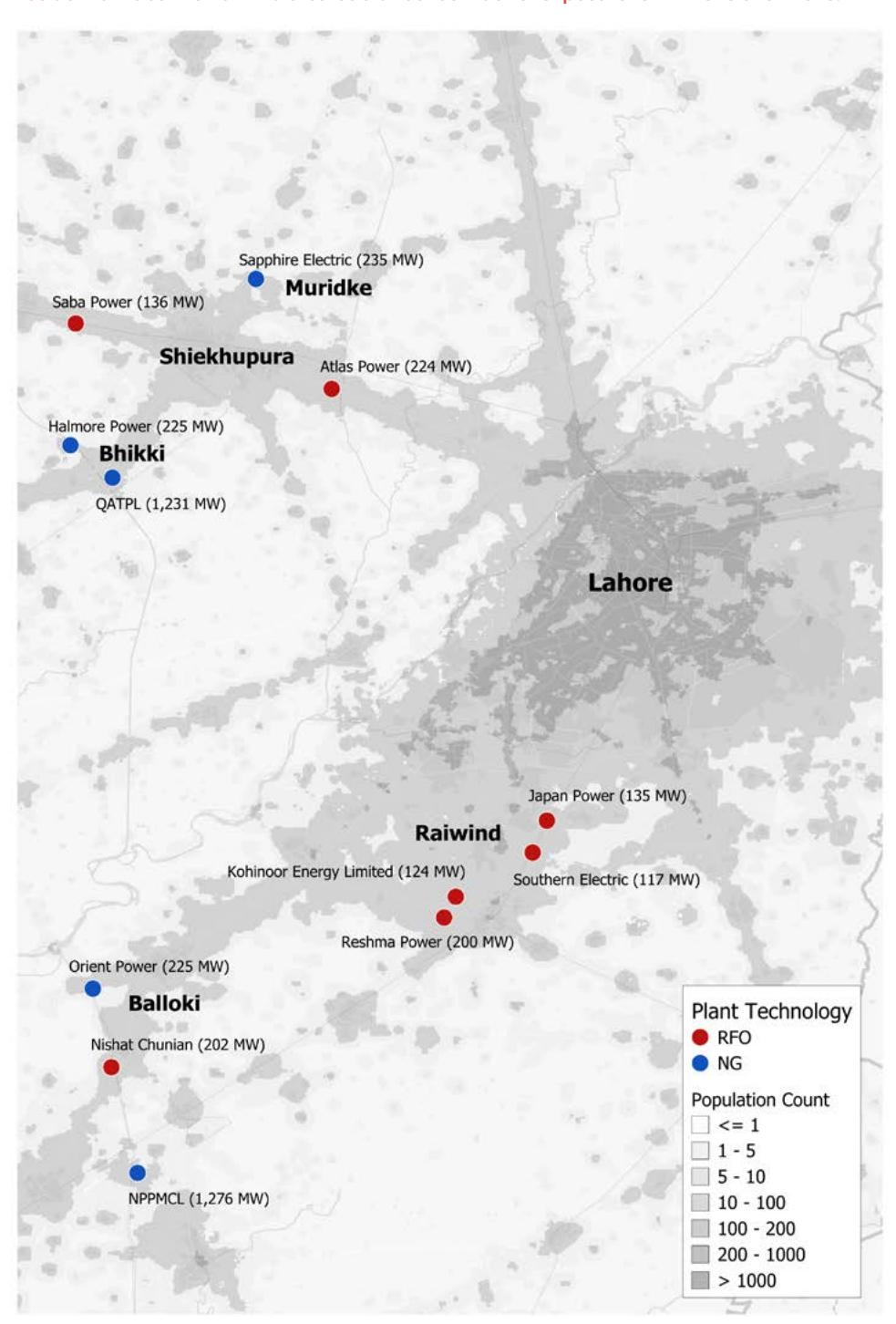
Exhibit 13.2 Lahore’s Ring of Power. This map visualizes the proximity of thermal power plants to Lahore’s densely populated zones. The clustering of plants using hazardous fuels near residential hubs like Raiwind creates a direct corridor of exposure for millions of citizens.
Haneea Isaad is an Energy Finance Specialist at the Institute for Energy Economics and Financial Analysis (IEEFA).
Footnotes
-
NEPRA. (2023). State of the industry report. [National Electric Power Regulatory Authority.](https://nepra.org.pk/publications/State%20of%20Industry%20Reports/State%20of%20Industry%20Report%20 2023.pdf) ↩