gender
The Disproportionate Gendered Burden
Sara Hayat ·
← Unveiling Pakistan's Air Pollution
**Exposure shaped by society:**Traditional roles as primary caregivers and managers of the home place women and girls at the forefront of the indoor air pollution crisis, exposing them to PM2.5 levels that can be hundreds of times higher than safe limits.
A threat to mothers and children: Air pollution is linked to severe adverse pregnancy outcomes in Pakistan, including stillbirth and miscarriages, and has long-term consequences for fetal health, lung function, and immune system development.
A policy blindspot: Despite clear evidence of differential impacts, Pakistan’s key environmental laws and clean air policies (including the National Clean Air Policy 2023) are gender-blind and lack specific The haze that blankets our cities is not gender-neutral. Sara Hayat moves beyond generalised health statistics to reveal the specific, disproportionate, and often invisible burden that air pollution places on the health, economic potential, and reproductive lives of Pakistan’s women. This chapter is a call to action against a fundamental policy blindspot, providing the evidence needed to build a truly equitable clean air strategy.
Air pollution has a profound and disproportionate impact on women, arising from both their exposure levels linked to traditional societal roles and their distinct physiological characteristics. Pregnant women and fetuses face particularly heightened risks with potentially long-term consequences. Despite startling evidence of these differential impacts, a dire need for greater female representation and perspective in environmental decision-making remains, as Pakistan currently lacks gender-sensitive environmental laws and policies.
Air pollution impacts women and men differently due primarily to two interacting factors: first, the conventional roles often assigned to women as primary caregivers and managers of the domestic sphere, which can increase their exposure duration, especially to indoor pollutants; and second, physiological differences that may render women more vulnerable to the health effects of certain pollutants. These factors necessitate gender-specific considerations in public health responses and air pollution mitigation strategies. For example, respiratory diseases like asthma often manifest differently in females and males, with research suggesting women are more likely to suffer from severe, treatment-resistant
forms of asthma. Indicative local data showed that 64% of asthma patients reported in selected Lahore hospitals were females primarily involved in indoor activities, pointing towards potential links with household exposures.1
Furthermore, women are disproportionately represented in Pakistan’s informal economy, often concentrated in low-skilled jobs. This frequently means they lack access to crucial information regarding their occupational rights, health and safety protocols, and specific workplace environmental protections. This vulnerability exacerbates the health impacts of air pollution they might face both at work and at home, while limiting their capacity to adapt or seek remediation. Interestingly, however, a study conducted in Pakistan’s Swat region revealed that females exhibited greater awareness than men regarding the consequences of air pollution and were more likely to believe that protecting health is more important than prioritising GDP growth.2
This suggests that with access to consistent, reliable information, women could serve as highly effective agents of change within their communities. A significant roadblock, however, remains the lack of updated, gender-disaggregated data within Pakistan on how air pollution specifically affects women’s health across different life stages and socioeconomic groups. This data gap severely hampers efforts to design targeted prevention strategies and provide equitable diagnosis and treatment.
The hazards within: indoor air pollution and women’s health
Indoor air pollution, primarily driven by fine particulate matter (PM2.5) released from burning solid fuels, has particularly harmful effects on women’s health due to the significant amount of time they typically spend indoors engaged in domestic work, especially cooking and cleaning near the source of emissions. Social factors such as poverty, gender invisibility in policymaking, and broader societal inequalities often intensify these impacts on women compared to men. The documented physical health effects are extensive and include respiratory diseases, exacerbation or onset of asthma, allergic reactions, cardiovascular problems, lung cancer, and other serious conditions.3
The primary cause of hazardous indoor air pollution in many Pakistani households is the burning of traditional biomass fuels—wood, dung cakes,4 crop residue—and sometimes kerosene for cooking and heating. These fuels remain prevalent in rural and peri-urban areas often due to easier access and lower (or zero) direct monetary cost compared to
cleaner alternatives. A survey involving 252 households in Pakistan’s Abbottabad and Haripur districts confirmed that reliance on solid fuels, the resultant pollution exposure, and cooking in enclosed kitchens without adequate ventilation have significant negative impacts on respiratory health.5
The World Health Organization (WHO) reinforces this danger, reporting that indoor smoke levels in poorly ventilated dwellings using traditional fuels can contain fine particle concentrations approximately 100 times higher than safe limits.6
Indoor air pollution, primarily driven by fine particulate matter (PM2.5) released from burning solid fuels, has particularly harmful effects on women’s health due to the significant amount of time they typically spend indoors engaged in domestic work.
Evidence indicates that women exposed to such indoor pollution suffer disproportionately, experiencing conditions like chronic obstructive pulmonary disease (COPD) at rates potentially twice as high as men in similar environments. Beyond direct inhalation exposure, the lack of access to clean energy imposes further burdens. Women and girls are often tasked with collecting firewood, requiring them to walk long distances, sometimes in harsh weather conditions. This not only exposes them to risks of sexual violence, harassment, and animal attacks but also involves strenuous physical activity that can damage musculoskeletal health. This time-consuming drudgery also represents a significant opportunity cost, consuming time that could otherwise be spent on education, income generation, or rest.
Addressing exposure to indoor air pollution requires tackling the reliance on polluting fuels. Shifting from traditional biomass to cleaner fuels, like LPG, offers a significant improvement. Ideally, transitioning towards renewable energy solutions like solar-powered electric cooking would eliminate household emissions entirely, though these currently face significant adoption challenges related to the high costs of procurement, operation, and maintenance, particularly for off-grid and low-income populations.
Raising awareness among women about the specific health effects of indoor air pollution is critically important. Even simple behavioural changes, where feasible, such as ensuring ventilation by keeping windows and doors open during cooking or positioning stoves in outdoor or semi-outdoor areas, can help reduce direct exposure. However, such awareness and behavioural change initiatives face considerable challenges. These include the limited social mobility experienced by many women, particularly in rural areas; reduced access to information channels like the internet, smartphones, and social media; and the reality that household financial decisions, including
those related to energy expenditure or stove purchases, are often made predominantly by men without adequate consideration of women’s health or preferences. Empowering women to adopt cleaner cooking methods, potentially through targeted financial support or income-generating opportunities, can yield substantial co-benefits, including improved family health, significant time savings previously spent collecting biomass, and potentially enabling women to pursue economic independence.
According to WHO, household air pollution resulting from the incomplete combustion of solid fuels and kerosene causes an estimated 3.2 million premature deaths globally each year. These deaths primarily result from ischemic heart disease (accounting for 32% of deaths), strokes (23%), lower respiratory infections (21%), chronic obstructive pulmonary disease (COPD) (19%), and lung cancer (6%). In 2019 alone, household air pollution was responsible for the loss of approximately 86 million healthy life years globally, with women, particularly those in low- and middle-income countries like Pakistan, bearing the largest share of this immense burden.
Dust represents another significant, though often less discussed, contributor to indoor air pollution, especially in developing countries. Sources are varied and include outdoor particulate matter tracked indoors via human activity or traffic, emissions from electronic devices and building materials, residues from pest control actions, and shedding from furniture like sofas and carpets, which can be major reservoirs. Concerningly, studies conducted in Pakistani cities including Lahore, Faisalabad, and Bahawalpur detected very high concentrations of potentially harmful polychlorinated biphenyls (PCBs) in household dust.7 Ingesting or inhaling contaminated dust can lead to various health issues, including skin damage, liver and gastrointestinal diseases, impairments to the immune and nervous systems, and elevated cancer risks. Women may face greater vulnerability due to their traditional roles in cleaning and dusting, and also because cultural practices like purdah may require them to spend more time indoors, increasing their overall exposure duration.8
The compounded risks of outdoor air
The health risks for women are compounded when exposure to indoor air pollution is combined with exposure to ambient (outdoor) air pollution. Women who experience prolonged indoor air pollution exposure may develop reduced lung function, making them subsequently more vulnerable to the damaging effects of outdoor pollutants. This dual exposure can exacerbate existing respiratory problems or contribute to the development of new ones.
Research increasingly points towards physiological differences influencing susceptibility. A 2022 study examining the effects of diesel fume exposure on lung diseases in nonsmoking men and women used advanced analytical techniques to identify changes in body proteins following controlled exposure. Preliminary findings indicated that women were more likely to suffer from severe forms of asthma that were resistant to standard
treatments, suggesting potential sex-based physiological differences in response to air pollution’s harmful components.9 1
Cognitive function also appears to be affected differently by air pollution across genders. A 2018 South Korean study investigated the effects of outdoor air pollution on cognitive function in elderly women across four different regions. The results confirmed a growing
A substantial body of research now demonstrates clear connections between exposure to air pollution and a range of negative effects on female fertility, pregnancy outcomes, and subsequent fetal health and development.
body of evidence indicating a relationship between air pollution exposure and declining cognitive function, with women showing a potentially higher risk for cognitive decline associated with increased exposure to both PM₁₀ and PM2.5. This study also found that the adverse effects of nitrogen dioxide (NO₂) exposure on cognitive function appeared greater in women than in men, possibly due to underlying neurological structural differences influencing how cognitive processes respond to pollutant-induced stress.11
Interestingly, a large 2017 Chinese study examining the impact of air pollution on verbal and mathematics test scores yielded contrasting gender-specific results. The study, involving subjects older than 10 years, found that both contemporaneous and cumulative exposure to air pollution negatively affected test scores, with a greater impact observed on verbal skills compared to mathematical abilities. However, contrary to some other findings, this study reported that men performed worse than women on both types of tests despite experiencing identical pollution exposure levels. This gender difference in performance impact was more pronounced among older and less educated individuals within the study cohort. The researchers hypothesised that this specific gender gap might relate to known differences in brain composition; men, on average, have a smaller volume of white matter
(which facilitates communication between brain regions) activated during general cognitive testing compared to women. Since air pollution is believed to potentially reduce white matter density, this could explain the differential impact observed on verbal scores and the greater vulnerability of men in this specific cognitive assessment.2 3 These varying findings
highlight the complexity of neurobiological responses to pollution and underscore the urgent need for more Pakistan-specific research. However, the broader body of evidence confirms that cognitive health for both genders is at significant risk from air pollution
Emerging research is also strengthening the link between air pollution exposure and an increased risk of breast cancer. A large-scale study conducted by the US National Institutes of Health (NIH), involving over 500,000 participants, found the highest incidence of breast cancer among women who had elevated levels of PM2.5 near their homes. Sources contributing to these PM2.5 levels included vehicle exhaust, various combustion processes, wood burning, and industrial emissions.14
Air pollution’s impact on women extends beyond direct physical health effects, significantly diminishing their ability to participate fully in the workforce. This occurs both through damage to their own health and by compromising the health of their dependents, for whom they often serve as primary caregivers. When children or elderly family members fall ill due to pollution-related ailments, women frequently must reduce their working hours or leave employment altogether to provide necessary care. A comprehensive 20-year study from Santiago, Chile, confirmed this dynamic; while overall working hours across the population were not significantly reduced by air pollution fluctuations, the hours worked specifically by women did decrease, especially for those with children. This gender difference in work hours widened notably during weeks with high pollution levels (exceeding 100 μg/m³), primarily attributed to women needing to care for children kept home from school due to pollution advisories.15 Ambient air pollution thus directly contributes to gender inequality in the labour market and exacerbates economic disparities through the gender-biased distribution of unpaid care responsibilities. Even for women not currently employed, the burden of caring for dependents made routinely ill by air pollution can significantly impede their potential entry into the labour force.
A period of critical vulnerability: pregnancy and fetal health
Reproductive health is particularly sensitive to environmental toxins originating from various anthropogenic sources, including agrochemicals, vehicle emissions, and industrial waste. A substantial body of research now demonstrates clear connections between exposure to air pollution and a range of negative effects on female fertility, pregnancy outcomes, and subsequent fetal health and development. Managing exposure during pregnancy presents unique challenges because harmful levels of pollutants can be encountered in both outdoor environments and enclosed indoor spaces, particularly those where biomass fuels are used.
Exposure to poor air quality during pregnancy is associated with several serious
complications, including preeclampsia (a dangerous condition characterised by high blood pressure), stillbirth and spontaneous miscarriages, gestational diabetes mellitus (GDM), and the development of high blood pressure in the mother.16 A study conducted in New York found that exposure to PM2.5 during the fifth and sixth months of pregnancy, as well as exposure to NO₂ around the time of conception (periconception), were linked to significantly higher odds of developing GDM.17 According to other research reviews, the first 1000 days of life—spanning from conception to approximately two years of age—represent a particularly critical window of susceptibility to the harmful effects of air pollution.4
Research from Kansas specifically suggests that exposure to ozone during the second and third trimesters of pregnancy may be the most sensitive period for adverse birth outcomes, including low birth weight.19 Furthermore, during fetal development itself, air pollution exposure can interfere with proper organogenesis, leading to outcomes such as poor lung development, low birth weight, and premature birth. It can also impair the proper development of the immune system, potentially increasing susceptibility to infections and diseases later in life.
Exposure to household air pollution during infancy has been linked to a 19% increase in the risk of postnatal stunting. Beyond these immediate developmental consequences, poor air quality exposure early in life can predispose individuals to greater vulnerability to chronic diseases in adulthood. Compounding these biological impacts, in most societal contexts, the demanding task of caring for an unwell infant or managing a child’s long-term health conditions falls primarily upon mothers, contributing significantly to their workload and increasing their physical and mental stress.
Policy blindspots: a gender-insensitive framework
Despite the clear and growing body of international and emerging local evidence indicating that air pollution disproportionately harms women’s health and wellbeing, Pakistan’s existing environmental laws and air quality policies largely fail to acknowledge or address this critical gender dimension. Specific remedial measures tailored to women’s unique vulnerabilities are conspicuously absent.
An examination of key policy documents reveals this gap. The National Clean Air Policy 2023 mentions the term “gender” only once, and solely within the context of urban planning and infrastructure development, without delving into health or socio-economic disparities. The country’s primary environmental legislation, the Environmental Protection Act 1997, completely overlooks gender considerations in its framework for environmental protection and pollution control.
Despite the clear and growing body of international and emerging local evidence indicating that air pollution disproportionately harms women’s health and wellbeing, Pakistan’s existing environmental laws and air quality policies largely fail to acknowledge or address this critical gender dimension.
Furthermore, the R-Smog Report 2018, commissioned by the Food and Agriculture Organization (FAO) and the Punjab Government as the first comprehensive geospatial research initiative on the causes of smog in the province, makes no mention of gender at all.20 This omission is particularly notable given the report’s stated aim was to promote the “development of appropriate strategies and necessary action plans” to combat smog.21
Currently, the only national policy document that directly addresses some of these issues is the Climate Change Gender Action Plan (ccGAP) 2022. This plan acknowledges the adverse health impacts of indoor air pollution on women, highlights the significant underrepresentation of women employed in the energy sector, and correctly notes the pervasive gender blindness that characterises most energy sector policies in Pakistan. However, its scope is primarily focused on climate change adaptation and mitigation, rather than providing a comprehensive framework specifically for addressing the gendered health impacts of air pollution itself.
An agenda for an equitable future
The evidence compellingly demonstrates that air pollution impacts females more severely than males across various health domains, affecting their physical wellbeing, economic opportunities, and reproductive outcomes. Recognising this disparity is not about fostering competition between sexes, but rather about acknowledging differential vulnerabilities to ensure that gender-specific laws, policies, and interventions become systematic priorities within environmental health governance.
For Pakistan to successfully move towards more equitable and effective air quality management, several key actions are essential:
Enhance women’s representation and meaningful participation in environmental decision-making bodies and policy management processes at all levels. Ensuring women’s insights, experiences, and expertise are actively sought and taken seriously is crucial for developing relevant and effective policies.
Centre women’s health concerns explicitly within national and provincial air quality
management strategies, as well as broader climate change adaptation and mitigation plans. This requires enacting gender-sensitive environmental laws and policies that recognise differential exposures and vulnerabilities.
Develop and invest in Pakistan-specific research and data collection that is disaggregated by gender and other relevant socio-demographic factors. This will reduce reliance on international studies, allow for a better understanding of local contexts and specific vulnerabilities within Pakistan, and provide a stronger evidence base for targeted interventions.
Raise targeted awareness among women and girls about the specific health impacts of both indoor and ambient air pollution. This knowledge can empower them to take protective measures where possible and also enable them to convey crucial health information to their families and communities.
Include men and boys in awareness and engagement efforts, particularly targeting those who often hold primary decision-making power within households and communities. Acknowledging and addressing the adverse effects of air pollution on women requires the understanding and cooperation of men.
Empower women economically by promoting access to and control over income, assets, and financial resources. Economic empowerment can provide women with greater agency to make health-protective choices for themselves and their families, such as investing in cleaner cooking methods or accessing better healthcare.
By systematically addressing these priorities, Pakistan can begin to close the significant gender gap in air pollution impacts, fostering environmental justice and creating more equitable health protections for all its citizens.
Sara Hayat is a lawyer specialising in climate change law and policy, and is a consultant and founding partner at Climate Change, Sustainability and Resilience Consultants.
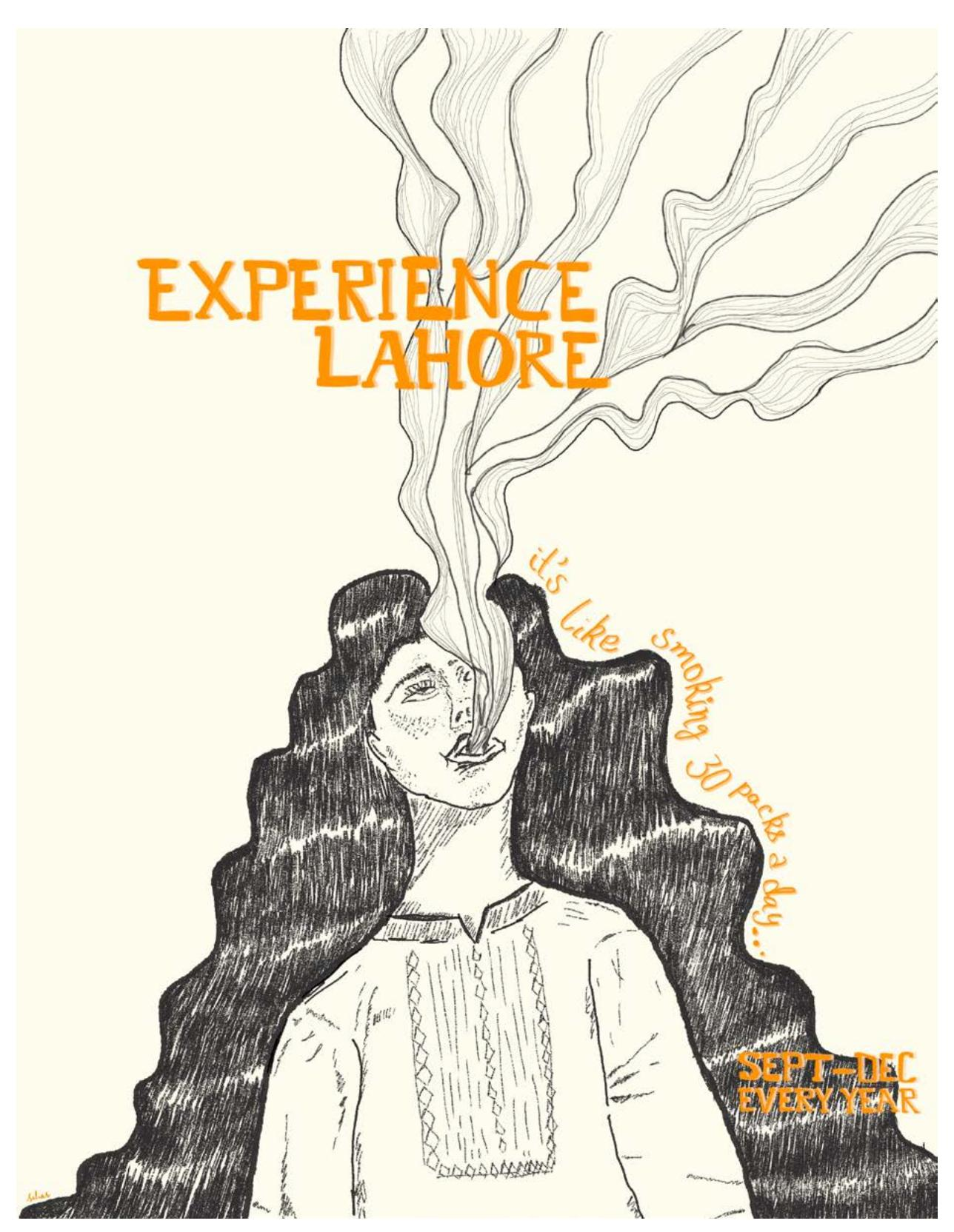
Adopting the visual language of a vintage travel poster, artist Saher Salman Haider offers a grim invitation to ‘Experience Lahore.’ The illustration satirises the city’s winter smog season, equating the simple act of breathing the ambient air to a heavy smoking habit, thereby visualising the invisible, cumulative damage inflicted on residents’ lungs.
Footnotes
-
Hemshekhar, M., Mostafa, D. H. D., Spicer, V., Piyadasa, H., Maestre-Batlle, D., Bolling, A. K., Halayko, A. J., Carlsten, C., & Mookherjee, N. (2022). Sex dimorphism of allergen-induced secreted proteins in murine and human lungs. Frontiers in Immunology, 13, 923986. ↩
-
IZA Institute of Labor Economics. (2017). Smog in our brains: Gender differences in the impact of exposure to air pollution on cognitive performance. ↩
-
Zhang, X., Chen, X., & Zhang, X. (2018). The impact of exposure to air pollution on cognitive performance. Proceedings of the National Academy of Sciences, 115(37), 9193–9197. ↩
-
Rani, P., & Dhok, A. (2023). Effects of pollution on pregnancy and infants. Cureus, 15(1), e33906. ↩