health
The Health Impacts
Dr. Saima Saeed ·
← Unveiling Pakistan's Air Pollution
Indoor air is a primary killer: Household air pollution from biomass fuels is a leading cause of death in Pakistan, with PM2.5 levels in rural kitchens measured at up to 600 times higher than in homes using
A whole-body assault: The health impacts of air pollution go far beyond the lungs, with Pakistani studies linking exposure to heart attacks, strokes, adverse pregnancy outcomes, and even psychological distress.
The vulnerable pay the highest price: Children face increased risks of pneumonia, stunted lung development, and elevated blood pressure, while occupational groups like traffic police and brick kiln workers show evidence of gene damage and impaired lung function.
Exhibit 8.1: Poison in the air. This infographic, adapted from the work of Adolfo Arranz for the South China Morning Post**, illustrates how fine particulate matter (PM2.5) bypasses the body’s defenses to cause systemic damage. The health impacts of air pollution extend far beyond the lungs, contributing to cardiovascular disease, strokes, adverse birth outcomes, and neurological damage, as documented in studies across Pakistan.**
The connection between the air we breathe and the health of our bodies has been known for centuries. Dr. Saima Saeed moves beyond historical anecdote to present the specific, damning medical evidence from Pakistan. This chapter documents the toll of air pollution on our lungs, our hearts, and our children’s futures, making the case for clean air as a fundamental pillar of public health.
The earliest links between air quality and health were noted by Hippocrates (c. 400 BC) and Seneca (c. 63-65 AD) who related illness to air quality and smoke. Bernardo Ramazzini, the father of occupational medicine, made significant contributions in the 18th century by documenting health effects of chemical and dust exposure among workers.1
The Industrial Revolution led to worsening air quality with some public policy responses to improve it. However, by the 20th century, severe pollution episodes drew concern, particularly the Meuse Valley fog in Belgium during 1930 and the Great Smog of London in 1952. These discrete events enabled direct inquiry as to how air pollution was associated with increases in morbidity and mortality. The approaches to making these links have been variable and include air quality monitoring, epidemiological studies, and geographical analysis, reflecting the interdisciplinary nature of this environmental phenomenon.
While improved policies have reduced air pollution’s impact in high-income countries, the consequences of climate change, often intertwined with air quality, remain a serious threat.2 Against this backdrop, Pakistan faces significant air quality challenges. The World Air Quality Report ranks Pakistan as the second most polluted country in the world.3 The consequences are severe: the Air Quality Life Index found that Pakistanis die between three and four years prematurely nationwide, with residents in heavily polluted areas like Lahore losing up to seven years of life expectancy.4 The World Health Organization estimates that the combined effects of ambient and household air pollution contribute to over 257,000 premature deaths annually in Pakistan.5
The National Clean Air Policy (2023) identified several major contributors to Pakistan’s air pollution: poor fuel quality for transport, subpar industrial emission standards, burning of agricultural residues, open solid waste burning, and biomass cooking fuels in households.
The hazard within: Pakistan’s indoor air pollution crisis
Indoor air pollution has a significant literature base supporting its association with poor health outcomes in Pakistan. The Global Burden of Disease study identified indoor air quality as a leading cause of death6 at the national level, especially in low and middleincome countries like Pakistan.7
A South Asian research review examining studies from 2000 to 2020 highlighted indoor solid fuel burning as a key source of respiratory symptoms with associated incidence of respiratory tract infections and chronic obstructive pulmonary disease (COPD). Additionally, asthma, pneumonia, cardiovascular diseases, hypertension, and cataracts were linked to this common household practice.8
Zafar Fatmi and his group published several key papers supporting the implication of household use of biomass fuel on various health outcomes.
PM2.5 levels and carbon monoxide
Households in rural Pakistan, which used biomass for cooking fuel, had PM2.5 levels that were between 380 and 600 times higher than those using natural gas. Carbon monoxide
levels were also significantly higher when traditional stoves were used, rather than a chimney stove.9
Pulmonary tuberculosis and acute coronary syndrome links
Women and children (aged between 1-12 years) using biomass fuels were more likely to have pulmonary tuberculosis, and this risk increased in a dose-dependent way.10 11 Additionally, when they investigated women admitted with acute coronary syndrome and compared them with matched controls with other diagnoses, a higher risk was found in current users of biomass for cooking.12
Considerations in rural Sindh cardiovascular studies
Interestingly, across villages in rural Sindh, no clear association was seen in biomass use and hypertension, angina, heart attacks or coronary artery disease.13 The authors postulated this may have been because the comparator group had used biomass in the past and had lingering health risks because of this.
Impacts of indoor air pollution on maternal health and childhood pneumonia, stunting, and mortality
The impact of indoor air pollution on pregnancy and child health outcomes has also been investigated.
Rozi et al. found poor air quality and tobacco consumption in the home to be implicated with a higher risk of stillbirth, miscarriages and preterm delivery.14 Reitzug and colleagues will be performing a regional analysis by investigating Demographic and Health Survey (DHS) data to explore this area further.15
In primary health centres in peri-urban slums of Karachi, children with fast breathing pneumonia were found to have poor quality housing, but indoor air quality and exposure to tobacco smoke appeared unrelated to pneumonia recurrence in this specific study.2
Similarly, no links were found with stunting (reduced height in children due to inadequate growth and development) and household air quality when DHS data was interrogated.17 In the under-fives, a weak association was found with all-cause mortality and indoor air pollution, with a slightly stronger association in those aged 12-59 months.18 Others showed a higher risk of childhood pneumonia (1.25 times) and acute respiratory infections (1.5 times) in the under-five pediatric population from DHS data in 2017-1819 and 2012-1320 respectively.
Meanwhile, a recent cross-sectional study in rural Punjab shows an association with the secondary use of solid fuels, the type of kitchen and cooking stove, as well as the presence of the child in the kitchen, which caused health effects in those children under 12 years old. These included coughing, eye watering and irritation, runny nose and in some, asthma, tuberculosis and pneumonia.21
The effects of outdoor air pollution
Ambient air pollution has broad-ranging health effects in Pakistan, especially impacting younger age groups. School-going children (aged between 8-12 years) that lived in highly polluted areas of Lahore (where PM2.5 levels were measured at 183 µg/m³) were compared with those living in low pollution areas (28.5 µg/m³). They were found to have significantly raised systolic and diastolic blood pressures.22
There is a dearth of studies exploring the risk of ambient air pollution on asthma in children in Pakistan. However, we may extrapolate from reviews of studies performed elsewhere that there is association between pollutants and reduced functional development of the lungs, as well as raised asthma incidence and poor outcomes from their asthma.23 Additionally, there are neurodevelopmental disorders, poor IQ, childhood cancers and raised risk of non-communicable diseases in adulthood documented globally.24
In the Malakand division of Northern Pakistan, a study of university students found that most experienced the effects of air pollution; often ENT problems, irritation and sometimes
respiratory problems including wheezing. A clear link was also seen with anxiety, depression and aggressiveness.25
From historical antecedents to contemporary research, Dr. Saeed illuminates the scale of the challenge, the specific health outcomes associated with different types of exposure, the biological mechanisms involved, and the urgent need for targeted interventions and continued scientific inquiry.
The impact of ambient air pollution has also been explored in adult human health.
Asthmatics in Lahore were found to have a significant correlation between PM10 exposure and asthma clinic visits.26 Mahmood and colleagues used statistical modeling with Geographic Information Systems (GIS) in Gujranwala to reveal an association with throat infections, eye irritation and runny noses as well as respiratory symptoms such as cough and shortness of breath.27 Both studies highlighted the vulnerability of the elderly population in their study sample.
In Karachi, cardiovascular admissions and emergency assessments for ischemic heart disease, hypertension, heart failure and cardiomyopathy were all linked with ambient PM2.5 levels.
In Islamabad, a geographical sensing study revealed a relationship between residents’ distance from an industrial site and its air pollution with the occurrence of cardiovascular symptoms such as angina.28
Along with cardiopulmonary links, the impact on cerebrovascular disease is also emerging. In a focused review for Asia, the link between short and long term air pollution and stroke and death was noted. Interestingly, there was a decline in admissions and mortality related to stroke during the COVID-19 lockdown suggesting a link to decreased levels of air pollution.29
Taken together, these studies build a strong body of evidence linking ambient air pollution in Pakistan’s cities to a significant burden of cardiovascular and cerebrovascular disease.
Important links with occupational exposure to air pollution are worth mentioning.
Brick kiln workers: impaired lung function
Brick kilns are a common trade in Punjab. Raza and colleagues describe impairment in lung function as measured by spirometry (a process of measuring lung function with a machine) along with frequent cough and shortness of breath in those workers in poor quality working sites.30
Exposure to polycyclic aromatic hydrocarbons (PAHs): traffic police and cooks
Kamal and colleagues have evaluated links between air quality and polycyclic aromatic hydrocarbons (PAHs), markers of gene damage that are probably carcinogenic. Traffic police officers, exposed to vehicular smoke, have higher levels of PAHs in Rawalpindi and Lahore, whilst this same profile was also seen in residential and professional cooks using biomass fuels.31 3 4 5
How pollution attacks the body
Understanding the mechanisms linking pollutants with adverse health outcomes are crucial to develop downstream public health interventions and policies.
Current understanding shows that pollutants themselves (such as particulate matter below 2.5 microns, ozone, nitrogen oxides and transition metals) are oxidants or generate reactive oxygen species. The resultant oxidative stress triggers different biological processes such as inflammation and cell death. This manifests as asthma exacerbations, respiratory infections and the onset of chronic asthma with deficits in lung function with long term damage.35 36 Organ function relies on defense mechanisms such as upregulation of protective scavenging and immune systems, which may be overwhelmed by the presence of this oxidative stress.
Air pollutants deposit on the respiratory tract epithelium and cause the well-described respiratory morbidity. However, their transportation to other tissues and organs can cause significant impact, such as cardiovascular morbidity. There are thought to be multiple mechanisms at play here. Humoral (blood-borne) pathways may include activation of cytokine release causing detrimental loss of homeostasis resulting in ischaemic heart
damage. Meanwhile neural (via the nervous system) pathways are implicated by direct activation of C fibres causing physiological changes such as hypotension, as well as releasing inflammatory mediators that cause cellular damage.6
In children, who have a described increase of risk in Pakistan, important considerations are that they are often oral breathers, thereby bypassing the nasal filter, and spend more time outdoors engaged in activities that raise their respiratory rate leading to increased inhalation. Their growing lungs are therefore at heightened risk of altered development and lung function.
An agenda for action and inquiry
Future research for air quality in Pakistan is imperative in response to the public health emergency that it has caused.
This review of the published literature highlights the multidisciplinary nature of research into air pollution’s health effects, reflecting the issue’s multi-faceted impact and providing an ideal foundation for interdisciplinary collaboration to create novel interventions.
Enhancing quantitative assessments and emission inventories
Whilst there have been several descriptions of the major sources of air pollution, there should be focused quantitative assessment of these due to the differing landscapes and cultures across the country. Beyond source apportionment, there should be welldemarcated, geographical emission inventories that can better differentiate rural and urban areas.
Strengthening health impact studies and registries
To date, health impact studies have been limited to discrete communities or cities. Collaboration of medical researchers across the country can build up important databases and registries which would be helpful to investigate the short and long term health effects. These can be used to identify impacts on vulnerable groups such as children, elderly and those with pre-existing conditions.
The correlations between air pollution, chronic disease, and mental health are also important areas for future investigation.
Focusing on vulnerable groups, interventional research and accessible solutions Finally, focusing on vulnerable groups, interventional research, and accessible solutions must be a priority. Interventions need to come with effectiveness studies, participatory research and low-cost solutions to ensure acceptability, cost-effectiveness and sustainability. Community involvement is essential and should include education that is accessible to all socio-economic groups to truly create the change needed for a healthier
The evidence laid out in this chapter is a clear and urgent call for a public health-centred
Pakistan.
approach to Pakistan’s air quality. From the toxic air in our kitchens to the hazardous haze in our cities, the burden of disease is a systemic crisis that can no longer be ignored. The research agenda outlined here is not a call for passive study, but a blueprint for informed action. Bridging these knowledge gaps is essential, not as an academic exercise, but as a fundamental step in crafting the life-saving policies and interventions that the people of Pakistan deserve.
Dr. Saima Saeed is a Respiratory Medicine consultant at the Indus Hospital and Health Network, where she has initiated multiple services to promote lung health. She is a keen advocate for multidisciplinary approaches to addressing significant risk factors for lung disease, namely air quality and tobacco.
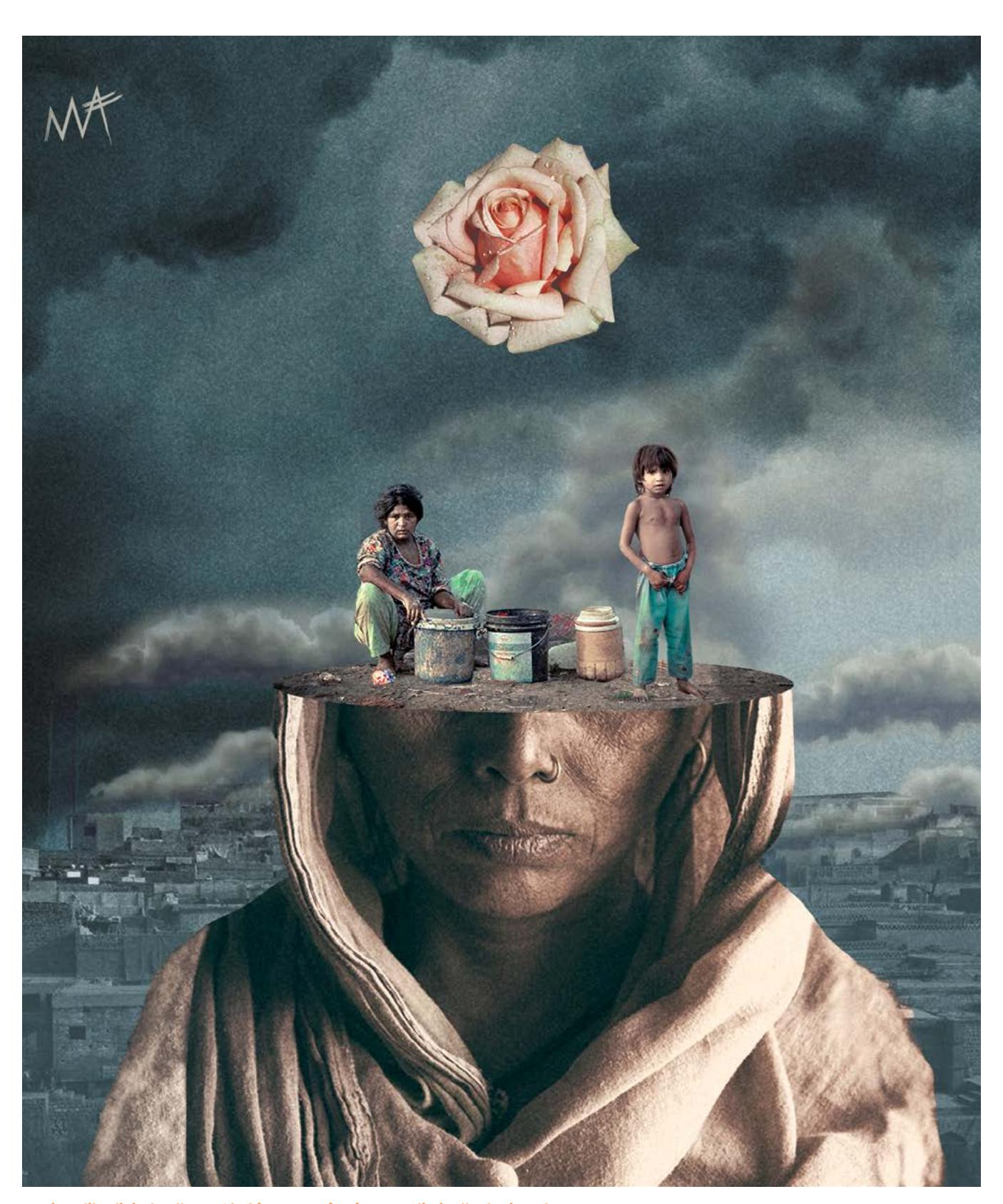
Maria Adil’s digital collage, Choking on Toxic Air, surrealistically depicts the stifling reality of breathing in a polluted metropolis. The artwork visualizes the psychological and physical encroachment of smog, where the simple act of survival becomes a struggle against the environment.
Footnotes
-
Ramazzini, B. (2001). De morbis artificum diatriba [Diseases of workers]. American Journal of Public Health, 91(9), 1380–1382. ↩
-
Brown, N., Rizvi, A., Kerai, S., Nisar, M. I., Rahman, N., Baloch, B., & Jehan, F. (2020). Recurrence of WHO-defined fast breathing pneumonia among infants, its occurrence and predictors in Pakistan: A nested case–control analysis. BMJ Open, 10(1), e035277. https://doi.org/10.1136/bmjopen-2019-035277 ↩
-
Kamal, A., Cincinelli, A., Martellini, T., & Malik, R. N. (2016). Linking mobile source-PAHs and biological effects in traffic police officers and drivers in Rawalpindi (Pakistan). Ecotoxicology and Environmental Safety, 127, 135–143. ↩
-
Kamal, A., Cincinelli, A., Martellini, T., & Malik, R. N. (2016). Biomarkers of PAH exposure and hematologic effects in subjects exposed to combustion emission during residential (And professional) cooking practices in Pakistan. Environmental Science and Pollution Research, 23(2), 1284–1299. ↩
-
Dondi, A., Carbone, C., Manieri, E., Zama, D., Del Bono, C., Betti, L., Biagi, C., & Lanari, M. (2023). Outdoor air pollution and childhood respiratory disease: The role of oxidative stress. International Journal of Molecular Sciences, 24(5), 4345. ↩
-
Esposito, S., Tenconi, R., Lelii, M., Preti, V., Nazzari, E., Consolo, S., & Patria, M. F. (2014). Possible molecular mechanisms linking air pollution and asthma in children. BMC Pulmonary Medicine, 14(1), 31. ↩