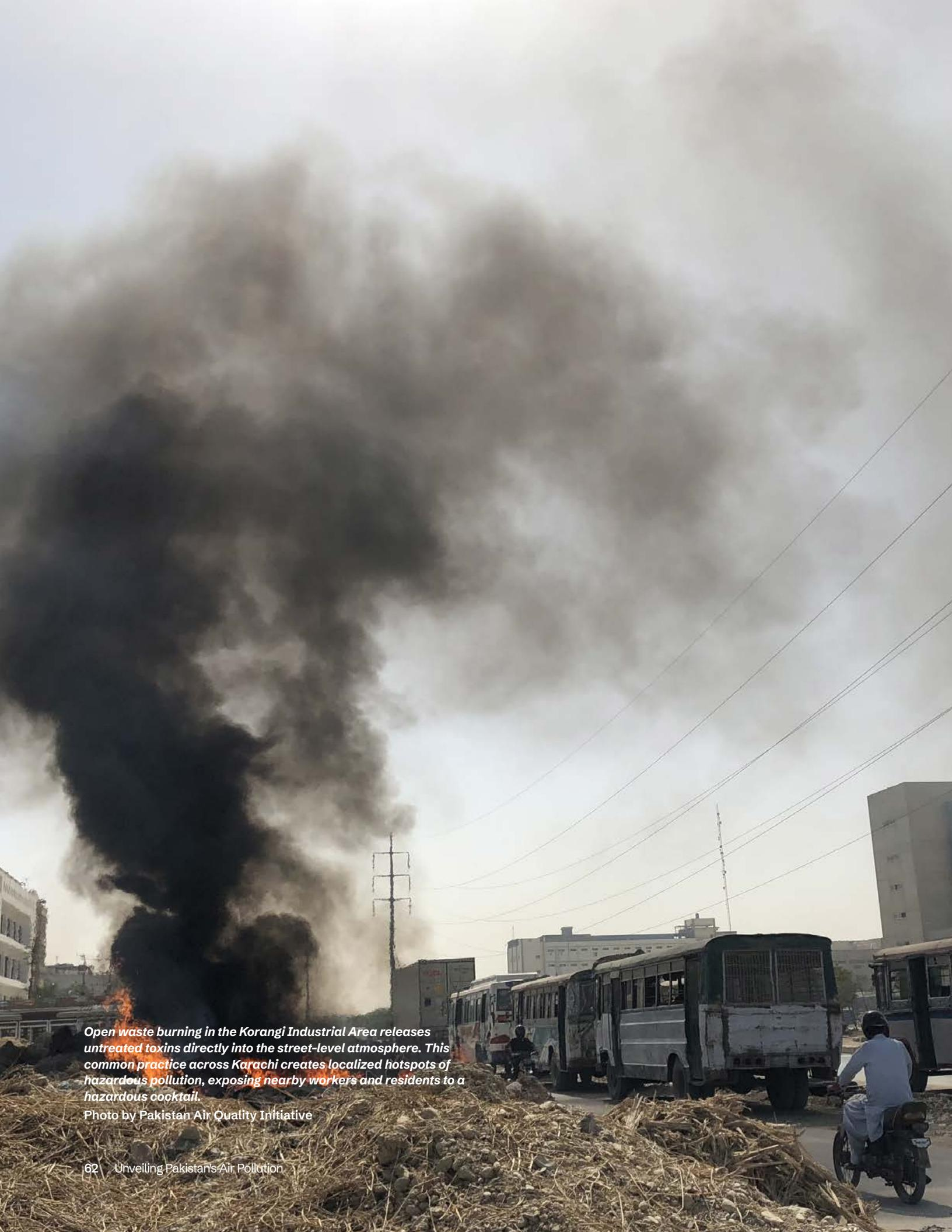
Lahore
PAQI Team ·
← Unveiling Pakistan's Air Pollution
Global epicentre of smog: Lahore’s annual PM2.5 pollution is nearly 21 times the WHO health guideline, cementing its status as one of the most polluted cities on Earth and costing the average resident 7 years of life expectancy.
No clean air days: In the entirety of 2024, Lahore did not experience a single day of clean air that met WHO standards; on 218 days, the air was so polluted it was classified as hazardous even by Punjab’s Environmental Quality Standards (PEQS).
A complex crisis: Lahore’s crisis is a three-way battle against a toxic blend of emissions from transportation (35%), industrial activities (28%), and a dense ring of brick kilns (17%).
In Lahore, the poison has become a season. The arrival of winter ‘smog’ is treated as an inevitability, a fog to be endured rather than a public health failure to be solved. This chapter dismantles that dangerous myth, providing the scientific evidence that Lahore’s crisis is not seasonal, but chronic: a year-round catastrophe driven by specific, controllable sources.
Pakistan’s second-largest city and the provincial capital of Punjab, Lahore stands as the undisputed hub of the nation’s air quality emergency. For years, it has captured international headlines, consistently ranking among the world’s most polluted cities. Its struggle with toxic air, particularly the severe winter smog that paralyses daily life, is a crisis on the scale of other regional megacities like New Delhi; demanding a granular, evidence-based diagnosis to move beyond speculation and towards solutions.
The history of a long-known crisis
This pollution emergency did not develop overnight. Air pollution monitoring reports from the Pakistan Environment Protection Agency (Pak-EPA) dating back to 2004 documented Lahore’s deteriorating air quality, leading to the 2006 Pakistan Clean Air Programme (P-CAP). While that initiative achieved limited success through banning two-stroke rickshaws and promoting CNG fuel conversion, conditions have worsened dramatically
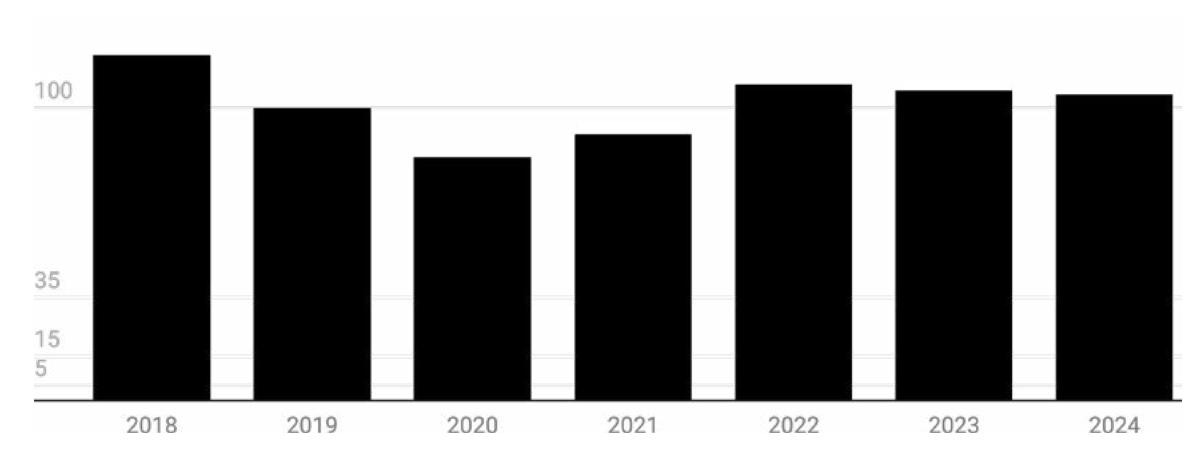
Exhibit 4.1: Lahore’s Chronic Pollution Problem (Annual Averages 2018-2024). This chart shows Lahore’s staggering annual average PM2.5 concentration over the last seven years. The consistently hazardous levels—all of which dramatically exceed the WHO Guideline—illustrate a long-term, unresolved public health crisis, not a new phenomenon.
since 2016.1 The severity of the crisis eventually required judicial intervention through the Lahore High Court (LHC), which began directing the Punjab government to impose policies for curtailing pollution.2
Despite these decades of recurring crises and judicial action, Lahore has lacked both comprehensive air quality monitoring networks and systematic source apportionment studies. While some previous efforts, such as an inventory for Lahore by the Urban Unit have been undertaken,3 there has been no comprehensive, multi-city, scientificallybenchmarked assessment to guide national policy. This emissions inventory addresses this critical gap, providing the scientific foundation needed for effective policy action.
A city breathing toxic air
The narrative of Lahore’s pollution as a mere “winter smog” problem is a dangerous misconception that has delayed meaningful action. The data from PAQI’s monitoring network reveals a year-round public health failure. The annual average pollution has remained stubbornly high for years, with no significant trend of improvement. In 2024, Lahore’s annual average PM2.5 concentration was a staggering 104.6 µg/m³. This level is not just high; it is an undeniable indictment of the city’s environmental state, standing at seven times Pakistan’s own National Environmental Quality Standard (NEQS) and nearly 21 times the level considered safe by the World Health Organization.
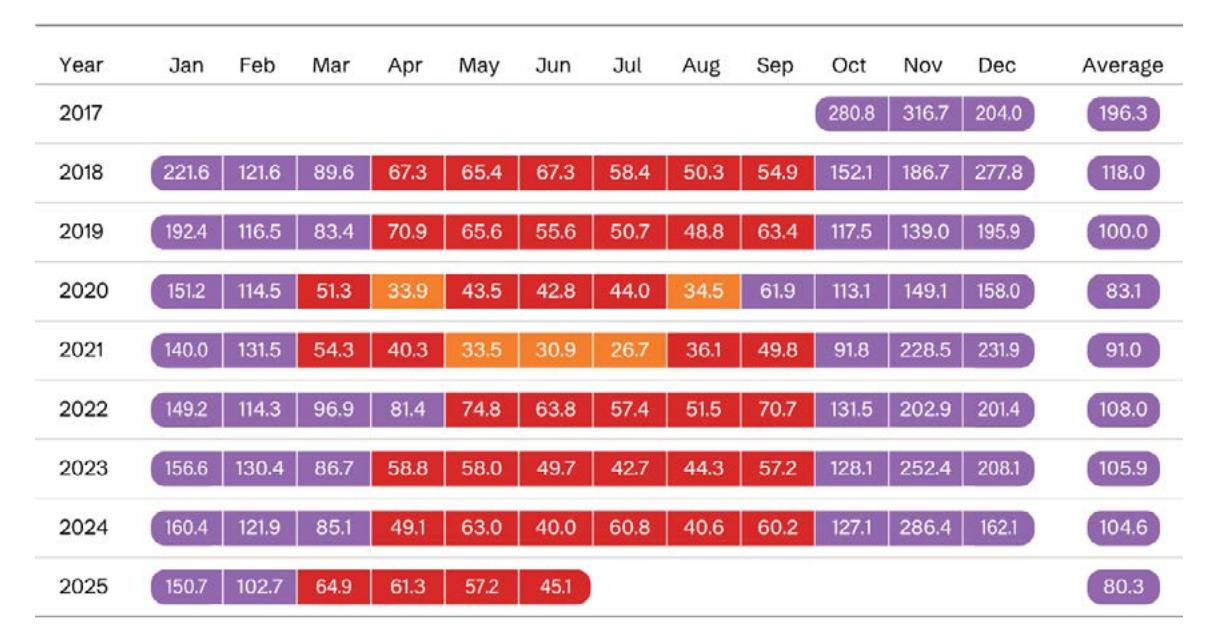
Exhibit 4.2: The Seasonal Cycle of Lahore’s Air Pollution (2016-2025). This heatmap visualises the monthly average PM2.5 concentrations for each year, revealing a stark and predictable pattern. Pollution consistently begins to rise in October (purple), peaks dramatically during the winter months of November through February, and recedes during the monsoon season (red). This demonstrates that Lahore’s ‘smog season’ is not an occasional event but a chronic, recurring public health threat each winter.
The ‘fifth’ season of smog
Lahore’s pollution crisis intensifies dramatically during winter months through a perfect storm of meteorological and human factors. Temperature inversions trap pollution near ground level from November through February, preventing vertical mixing and dilution. This phenomenon, termed a “meteorological misfortune” for the Indo-Gangetic plain,4 essentially places a lid over the city, causing pollutant concentrations to build rather than disperse.
Compounding this, post-harvest crop burning in the surrounding region can contribute 30-50% of ambient pollution during early November. Furthermore, seasonal natural gas shortages often drive a 2-3x increase in residential emissions as households turn to burning wood, coal, and even waste for warmth.
The daily reality for Lahore’s citizens is catastrophic. Data from our monitoring network shows that in the entirety of 2024, residents experienced zero days of air quality meeting WHO’s 24-hour guideline for safe air. On 218 of those days, pollution was so severe it also breached the government’s own weak legal limit, underscoring a state of near-perpetual non-compliance.
Anatomy of Lahore’s pollution
This daily reality of hazardous air is a direct result of a complex mix of emission sources.
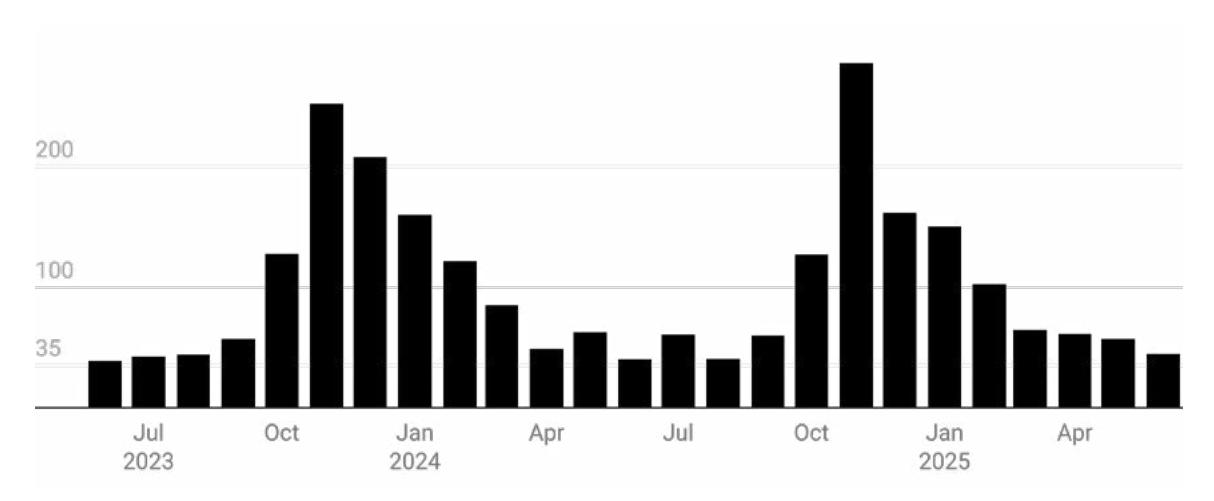
Exhibit 4.3: Lahore’s Seasonal Pollution Cycle (July 2023 to June 2025). This chart illustrates the stark seasonal pattern of Lahore’s air pollution. While the air is unhealthy year-round, pollution levels begin to rise in October and soar during the winter months of November through January, creating a predictable and severe “fifth season of smog”.
This inventory estimates that Lahore’s airshed is burdened annually with 26.68 kilotons of PM2.5, 39.81 kilotons of SO2, 52.65 kilotons of NOx, and 207.08 kilotons of CO. The sectoral breakdown reveals a complex challenge dominated by three sectors.
The diesel dilemma
Within the transport sector, Lahore’s 7+ million vehicles present a striking pollution paradox. Despite comprising just 20% of the vehicle fleet, diesel-powered trucks, buses, and utility vehicles generate over 65% of transportation-related PM2.5. This disproportionate contribution highlights the critical importance of addressing diesel emissions specifically. Meanwhile, the city’s massive motorcycle fleet—estimated at 4.74 million vehicles contributes disproportionately to carbon monoxide emissions through incomplete combustion, creating a dual challenge that requires differentiated strategies.
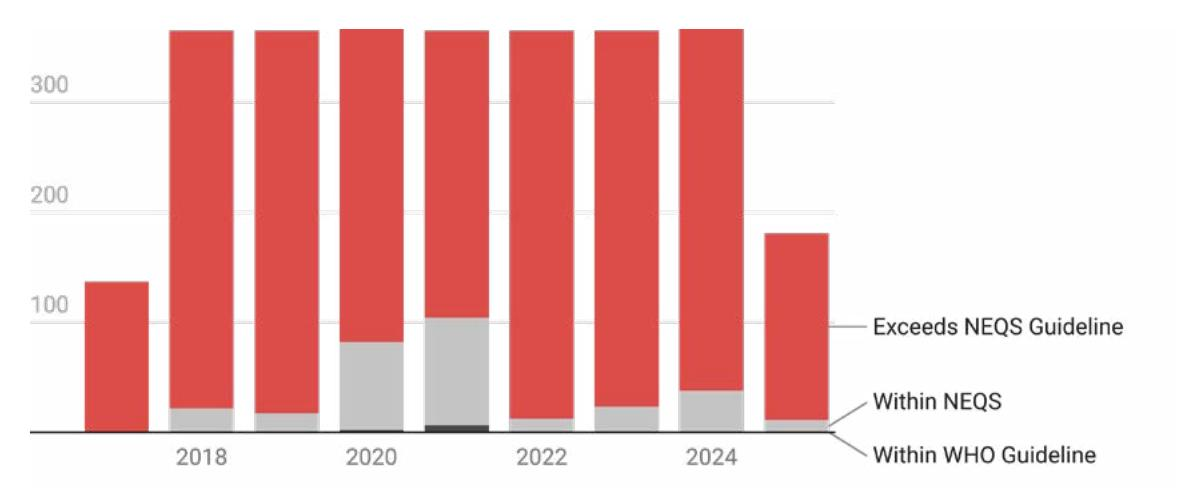
Exhibit 4.4: The Daily Health Burden in Lahore (2024). This chart illustrates the daily reality of breathing Lahore’s air. The complete absence of green (“Meets WHO Guideline”) shows that not a single day in 2024 had clean air. The vast majority of days fall into categories that exceed Pakistan’s national standards (yellow) or are so hazardous they also breach Punjab’s own legal limits (red), demonstrating a state of perpetual crisis.
| Total annual emissions in kilotons in Lahore | |||||||||||
|---|---|---|---|---|---|---|---|---|---|---|---|
| Sector | PM2.5 | SO2 | NOx | CO | Total | ||||||
| Transport | 9.27 | 11.2 | 43.06 | 170.63 | 234.16 | ||||||
| Industry | 7.52 | 6.81 | 4.02 | 2.81 | 21.16 | ||||||
| Brick Kilns | 4.50 | 4.42 | 0.32 | 12.74 | 21.98 | ||||||
| Power | 0.09 | 15.88 | 2.61 | 0.24 | 18.82 | ||||||
| Household | 2.05 | 0.04 | 1.49 | 12.53 | 16.11 | ||||||
| Waste | 1.56 | 0.04 | 0.04 | 7.51 | 9.15 | ||||||
| Commercial | 1.69 | 1.42 | 1.11 | 0.62 | 4.84 | ||||||
| Total | 26.68 | 39.81 | 52.65 | 207.08 | 326.22 |
Exhibit 4.5: Sectoral Contributions to Air Pollutant Emissions in Lahore (2021). The transportation sector is the primary source of NOx and CO, while the power sector is the main contributor of SO2. Industry and transport are the leading sources of health-damaging PM2.5.
Industry and brick kilns
Lahore is encircled by a ring of industrial activity and brick kilns that operate with few emission controls. The city’s industrial sector, particularly steel manufacturing and foundries, contributes 28% of all PM2.5. Despite occupying less economic space, the brick kiln sector contributes a disproportionate 17% of Lahore’s PM2.5, often burning highpolluting fuels like rubber and waste in outdated, inefficient kilns.
Mapping the hotspots
Lahore’s pollution isn’t distributed equally. Our spatial analysis reveals distinct concentration patterns that should guide targeted interventions. PM2.5 and NOx emissions concentrate along major arterial roads and the ring road system. Heavy particulate concentrations appear in southern and eastern industrial zones, particularly around steel manufacturing areas. The historic urban core shows higher composite pollution levels due to congestion and commercial density, while traditional brick kilns form a ring around the city perimeter, creating concentrated emission zones in peri-urban areas.
A path to cleaner air for Lahore
This emissions inventory points to a clear, evidence-based path forward. The following interventions, targeting the dominant sources identified in this report, could reduce Lahore’s health-damaging PM2.5 pollution by up to 50% if fully implemented.
1. Transportation controls
As the largest single source of PM2.5 (35%) and the overwhelming source of toxic NOx and CO, Lahore’s transport sector is the highest-priority area for intervention, with a PM2.5 reduction potential of 20-25%. A successful strategy must be surgical, targeting the super-emitting vehicles and systemic issues that drive emissions up.
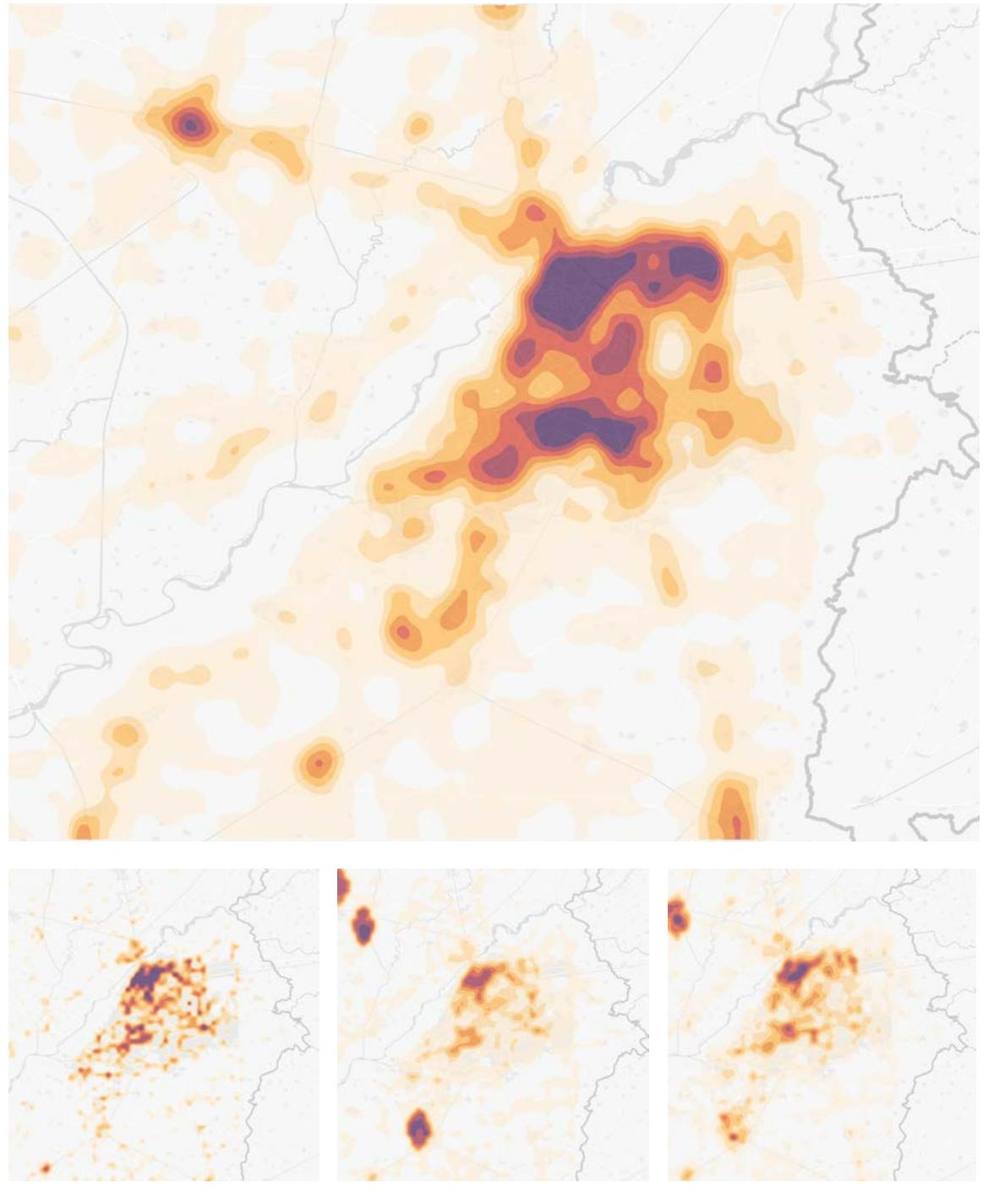
Exhibit 4.8: Spatial Distribution of Emissions in Lahore (2021). These heatmaps show the concentration of PM2.5 (top), SO2 (left), NOx (middle), and CO (right) emissions. The data reveals pollution hotspots along major transportation corridors like the Ring Road and in the industrial zones to the south and east of the city centre.
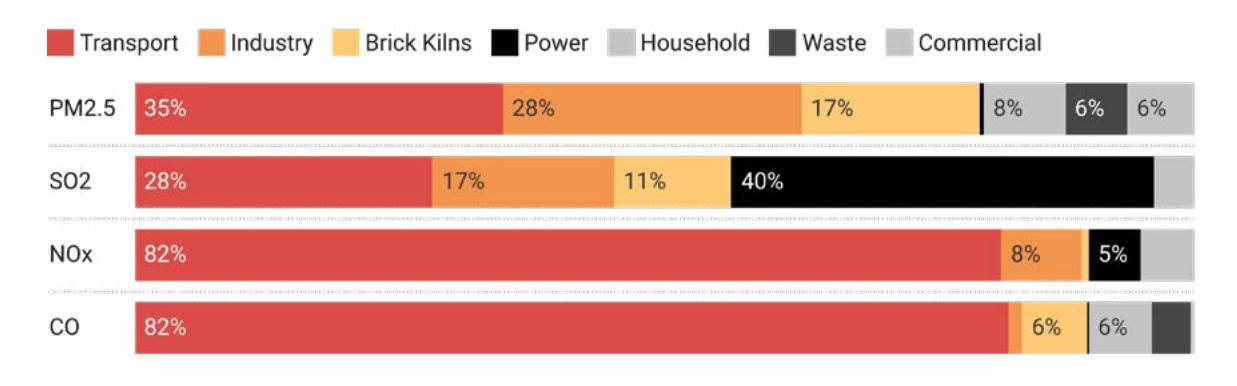
Exhibit 4.5: The Emissions Fingerprint of Lahore’s Pollutants. Lahore’s air quality challenge requires a multipronged strategy. While the transport sector is the overwhelming source of NOx and CO, the most healthdamaging pollutant, PM2.5, comes from a more complex mix of transport, industry, and brick kilns. Tackling one source alone will not solve the crisis.
- Vehicle inspection and maintenance: Implement a rigorous, mandatory, and corruption-proof vehicle inspection programme specifically targeting the commercial diesel fleet (trucks and buses).
- Low emission zones: Establish LEZs in central Lahore to restrict or charge the most polluting vehicles, which will accelerate fleet turnover and reduce exposure in the most congested areas.
- Fuel quality improvement: Accelerate the transition to higher fuel quality standards, specifically mandating low-sulfur Euro-V diesel, which is critical for enabling modern emission control technologies.
- On-road enforcement: Deploy remote sensing technology to identify and penalise super-emitting vehicles in real-time, moving beyond traditional, and often ineffective, visual inspections.
2. Industrial emission controls
The industrial sector is Lahore’s second-largest PM2.5 source (28%) and a major contributor to toxic SO2, with a PM2.5 reduction potential of 15-20%. The problem is driven by the widespread use of outdated production methods, particularly in steel manufacturing, and a lack of modern pollution control technologies.
- Control technologies: Mandate and enforce the installation of proven abatement technologies, such as electrostatic precipitators (ESPs) or fabric filters (baghouses), in all major industrial facilities, especially steel factories and foundries.
- Fuel switching: Support the conversion of industrial boilers and furnaces from highpolluting fuels like coal and furnace oil to cleaner alternatives like natural gas.
- Continuous monitoring: Require the installation of Continuous Emissions Monitoring Systems (CEMS) for all large industrial facilities to ensure compliance with environmental standards is verified with real-time data.
3. Brick kiln modernisation
This sector requires an accelerated and complete technological transformation. The disproportionate impact of brick kilns, contributing 17% of PM2.5, makes them a highleverage target with a PM2.5 reduction potential of 10-12%.
- Technology transition: Enforce and accelerate the complete transition from outdated Fixed Chimney Bull’s Trench Kiln (FCBTK) technology to modern, significantly cleaner zigzag kilns.
- Fuel regulation: Implement a strict ban on the use of all high-polluting fuels in kilns, including waste materials and rubber tires, with strong penalties for non-compliance.
- Next-generation pilots: Support pilot programmes for next-generation technologies, such as electric or renewable-powered kilns, to create a pathway for future modernisation.
4. Seasonal action plan
While the interventions above address the root causes of chronic pollution, a specific emergency action plan with a winter PM2.5 reduction potential of 5-10% is necessary to protect public health during the predictable, severe winter smog episodes.
- Emergency response protocols: Establish a data-driven public health alert system to trigger pre-planned, temporary restrictions on non-essential traffic, construction, and high-emitting industrial activities during severe smog episodes.
- Regional coordination: Enhance coordination with neighbouring districts and provinces to manage and eliminate agricultural crop burning during the critical postharvest season.
- Crop residue management: Promote and subsidise alternative technologies and business models for managing crop residue, such as conversion into biofuel or animal fodder, to provide farmers with viable alternatives to burning.
Several of these recommendations were highlighted in a November 2024 letter to the Prime Minister from the Pakistan Air Quality Experts (PAQx) group—a coalition of 27 professionals. Their urgent call to action underscored the need for both emergency measures to provide immediate respite and the longer-term structural solutions detailed in this inventory.5
11th November 2024
To, The Honorable Prime Minister of Pakistan Government of Pakistan
Subject: Urgent Action on Pakistan’s Air Pollution Crisis: A Science-Based Approach to Public Health Protection
Dear Prime Minister,
The severe decline in air quality across Punjab and other regions of Pakistan has reached hazardous levels, posing a critical public health risk that demands immediate and strategic action. This situation is urgent and requires a unified effort to protect the health and well-being of millions of citizens.
Data on particulate matter pollution indicates that October and November 2024 have been the worst on record, with air quality levels exceeding World Health Organization (WHO) guidelines and surpassing Pakistan’s own legal limits. The widespread impact of this pollution is being felt across major urban centers, with millions of citizens suffering from respiratory ailments and other health complications.
The Pakistan Air Quality Experts (PAQx) group, a coalition of 27 professionals from fields such as public health, environmental science, law, and economics, remains committed to addressing this public health crisis. While the National Clean Air Policy and Punjab’s Clean Air and Smog Mitigation Plans are a good starting point, PAQx believes that an approach grounded in scientific evidence and global best practices is essential to effectively manage air pollution.
PAQx offers the following immediate recommendations:
-
- Shut Down All Brick Kilns: Brick kilns are one of the largest contributors to air pollution in the region. A shutdown would immediately reduce emissions by 15%.
-
- Vehicle Emission Controls and temporary Heavy transport curtailment: A focused crackdown on vehicles that fail to meet emissions standards and curtailing heavy transport from 10 pm to 10 am would provide an immediate reduction in harmful pollutants in urban areas by a further 15%.
-
- Shut Down All Non-Compliant Polluting Industries: Industries that fail to comply with environmental standards should be shut down, significantly reducing air pollution levels in highly populated areas by 15%. This shutdown should be in effect during smog emergencies and continue until a roadmap for emissions controls is in place.
PAQx offers the following overall recommendations to guide the development of a sustainable plan for clean air:
- Proactive and comprehensive policy-making: Air pollution is a year-round challenge that requires long-term, coordinated, evidence-based solutions across multiple sectors including health, education, energy, transport, oil standards, and finally transboundary cooperation.
Page(s) 1 / 2 Email: hello@pakairquality.com
-
- Alignment with WHO Air Quality Standards: Revising Pakistan’s air quality standards to align with WHO guidelines based on health outcomes. We propose adopting interim target 1 of the WHO air quality guidelines as a short-term goal to be achieved within 3 years for designated attainment airsheds.
-
- Nationwide Real-Time Air Quality Monitoring Network: Establishing a comprehensive, nationwide real-time air quality monitoring network is crucial for informed decision-making and responsive policymaking. Such a system would provide continuous real-time data enabling timely alerts and empowering both citizens and policymakers to take swift, effective action in managing air quality.
-
- Airshed-Level Management: Policies should focus on managing pollution across the meteorological airshed, with localized mitigation as the starting point for transboundary cooperation.
-
- Establish clean air zones as a pilot: Designate Lahore and the twin-cities of Ralwapindi/Islamabad as focal points for attaining clean air while policies are being planned.
-
- Sustainable Urban Planning and Transportation: A shift toward urban planning that prioritizes sustainable public transit and low-emission technologies.
-
- Strengthening Regulatory Capacity: Enhance the government’s regulatory capacity across departments to enforce air quality standards as an overarching target to ensure compliance across all sectors.
-
- Transition to Clean Technology: Accelerating the transition to clean technologies, such as electric mobility, clean industrial practices, and alternative cooking and heating solutions, should be prioritized along with a focus on improving overall energy efficiency.
-
- Upgrade of fuel quality: Vehicle emissions standards to be equivalent to Euro-6 standards, along with upgrades of fuel quality available in the supply chain.
-
- Evidence-Based Decision-Making: Prioritizing epidemiological research to better understand the health impacts of air pollution.
-
- Equitable and sustainable policies: Air pollution disproportionately affects vulnerable communities and has significant ecological impacts. Addressing these inequalities should be a central focus of policy development.
-
- Crop Residue Management: A targeted strategy to engage farmers and the introduction of technological solutions for residue management to support adoption of sustainable alternatives.
These recommendations reflect a collaborative, science-based approach to tackling air pollution. We believe that their implementation will help Pakistan move toward a cleaner, healthier future.
The PAQx group is fully committed to working alongside the government and other stakeholders to craft policies that address the root causes of pollution and protect public health.
Yours sincerely, Pakistan Air Quality Experts (PAQx) group
FOR IMMEDIATE RELEASE
Contact Dawar H. Butt (Convenor, PAQx) at dawar@pakairquality.com for any inquiries.
Page(s) 2 / 2 Email: hello@pakairquality.com