lahore
How Lahore Became the Global Epicenter of Air Pollution
From seasonal smog to year-round crisis — the factors that made Lahore one of the most polluted cities on Earth.
Abid Omar ·
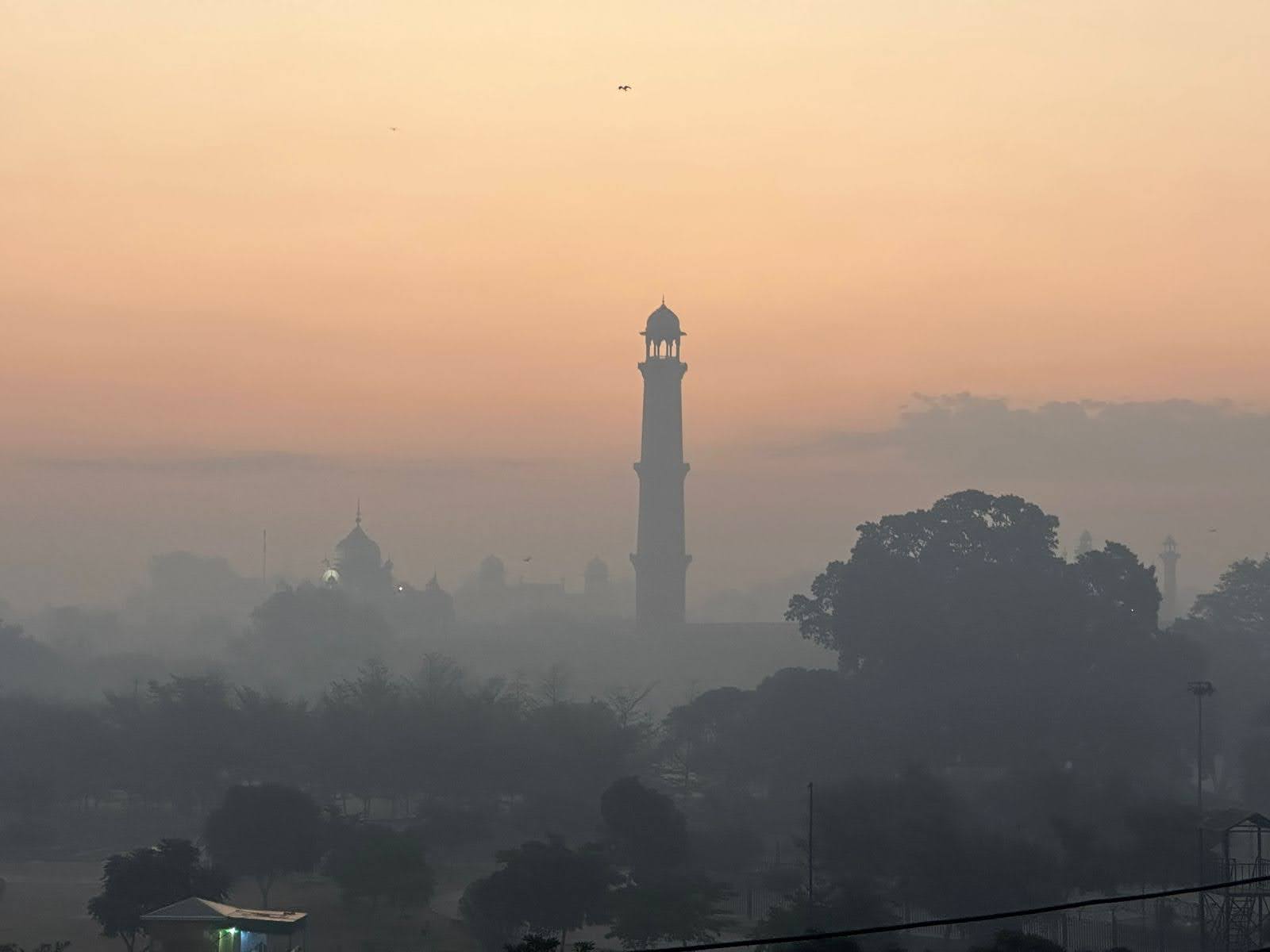
Pakistan is at the center of the world’s worst air pollution belt. The Indo-Gangetic Plain, stretching from the Himalayan foothills across northern India and into Punjab, consistently registers some of the highest particulate matter concentrations on the planet.
A shared airshed
Air pollution respects no borders. The particulate matter generated in the plains of Punjab today becomes the black carbon depositing on the glaciers of the Hindu Kush Himalaya tomorrow. This shared airshed means that solutions must be regional, not just local.
The winter smog phenomenon
Every winter, Lahore disappears under a thick blanket of smog. The phenomenon is driven by a combination of factors:
- Temperature inversions trap pollutants close to the ground
- Crop burning in Indian and Pakistani Punjab adds massive particulate loads
- Vehicle emissions from an aging, poorly maintained fleet
- Industrial pollution from brick kilns and factories operating without emission controls
- Construction dust from rapid, unregulated urban expansion
The data tells the story
According to the Air Quality Life Index (AQLI) by the Energy Policy Institute at the University of Chicago, residents of Lahore lose an average of 4.4 years of life expectancy due to air pollution — more than the impact of smoking, alcohol, or conflict.
Pakistan’s major cities consistently exceed both WHO guideline limits and Pakistan’s own EPA safe levels. Yet significant data gaps remain: the country lacks comprehensive emission inventories, source apportionment studies, and localised health impact assessments.
From citizen science to systematic monitoring
PAQI began as a citizen science initiative, filling the data gap with community-driven air quality measurements. What started with a handful of low-cost sensors has evolved into a network providing real-time data that empowers communities, informs policy, and holds authorities accountable.
The first step to solving a crisis is measuring it. Without data, there is no accountability.
The path forward requires a national scientific foundation built on science, data, and good governance — because a national crisis demands a national response.