karachi
The Burning Crisis: Waste Incineration and Air Quality in Karachi
Open waste burning along railway lines and in informal settlements is a major but overlooked source of toxic air pollution in Pakistan's largest city.
Abid Omar ·
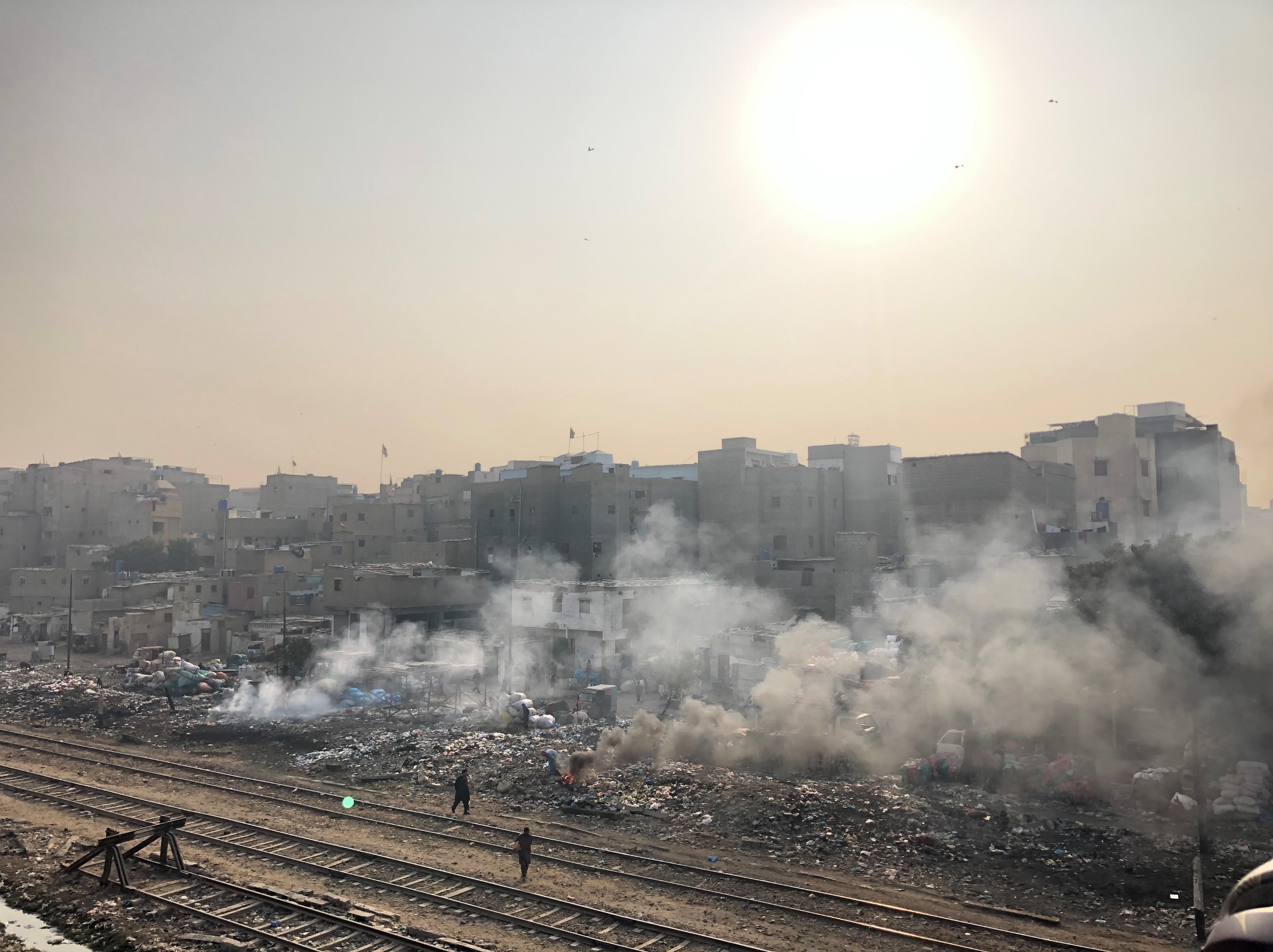
While Lahore dominates air pollution headlines, Karachi faces its own severe and distinct challenges. Pakistan’s largest city — home to over 16 million people — contends with a toxic mix of industrial emissions, vehicle exhaust, and widespread open waste burning.
The visible crisis
Along railway corridors and in informal settlements across Karachi, open burning of municipal waste is a daily occurrence. Residents burn household refuse, plastic, and organic waste in the absence of adequate municipal collection services. The resulting smoke contains fine particulate matter, dioxins, furans, and heavy metals — a cocktail of pollutants with severe health consequences.
Why it persists
Karachi generates an estimated 12,000 tonnes of solid waste daily, but municipal services collect only a fraction. The shortfall is greatest in low-income areas and katchi abadis (informal settlements), where residents resort to burning as the only practical disposal method.
The problem is compounded by:
- Inadequate landfill capacity — existing sites are overwhelmed
- No waste segregation at source, making recycling difficult
- Limited enforcement of open burning regulations
- Industrial waste mixed with household refuse
Health impacts
Communities living near burning sites experience elevated rates of respiratory illness, particularly among children and the elderly. Studies in similar contexts have linked chronic exposure to waste burning smoke with:
- Increased asthma and bronchitis
- Reduced lung function in children
- Higher rates of cardiovascular disease
- Cancer risks from dioxin exposure
The people most exposed to waste burning smoke are those with the least power to change their circumstances. This is an environmental justice crisis.
A path forward
Addressing Karachi’s waste burning crisis requires investment in municipal waste collection, particularly in underserved areas. Community-based waste management programmes have shown promise in pilot projects, but scaling them requires political will and sustained funding.
PAQI is working to quantify the air quality impact of open waste burning through targeted monitoring campaigns, providing the evidence base needed to prioritise this overlooked pollution source.